Does coffee wood contain caffeine? The ASPCA "coffee tree" is a different plant
We have no laboratory measurement of caffeine in coffee wood chews, and we have not found an official source that publishes one, so we will not give you a number or call the wood caffeine-free. What we can clear up is a common mix-up: the "Coffee Tree" on the ASPCA toxic plant list is Polyscias guilfoylei, family Araliaceae. Our chews are cut from Robusta coffee, Coffea canephora, family Rubiaceae. They are two different plants.
- For sellers answering customer questions
- Coffee wood chews
- About 5 minutes to read
Why customers ask
The name does the damage. A dog owner reads "coffee wood", remembers that coffee is bad for dogs, searches for it, and lands on a plant database that lists a "Coffee Tree" as toxic to dogs. From there it is a short step to a one-star review or a question in your listing that other buyers read before they decide.
The worry is reasonable. Coffee itself is a real concern for pets, and the plant listing looks like it confirms the fear. The answer has two parts: which plant the listing is about, and what is and is not known about the wood.
What the ASPCA "Coffee Tree" listing actually says
The ASPCA Coffee Tree entry describes this plant:
| Field on the ASPCA page | What it says |
|---|---|
| Scientific name | Polyscias guilfoylei |
| Family | Araliaceae |
| Other common names | Wild Coffee, Geranium-Leaf Aralia |
| Toxicity | Toxic to dogs, cats and horses |
| Toxic principle | Saponin |
| Clinical signs | Contact dermatitis, vomiting, anorexia, depression |
Note the family and the toxic principle. The plant is an aralia, and the substance named is saponin, not caffeine. The listing is about a different plant that happens to share the common name "coffee tree".
Which plant coffee wood chews come from
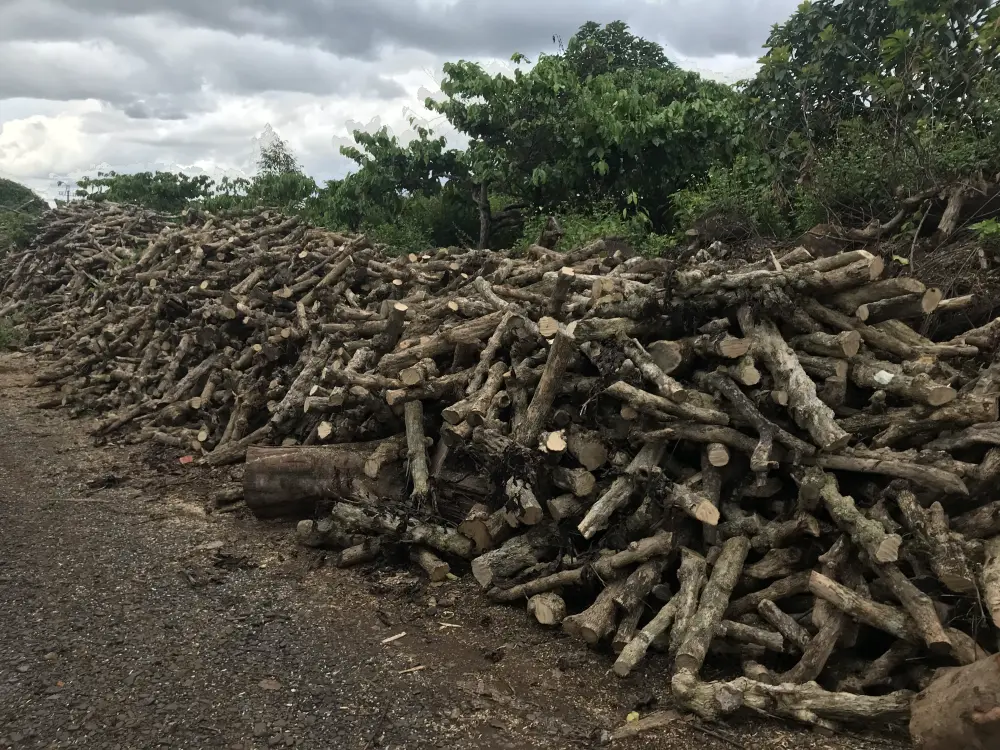
Our coffee wood comes from mature Robusta trees, 20 years old or more, at the end of their productive life. They are cleared to make way for new planting as part of the normal renewal cycle on coffee farms in the Central Highlands of Vietnam.
Robusta coffee is Coffea canephora, in the family Rubiaceae. The USDA plant taxonomy database (GRIN) lists "robusta coffee" as a common name for Coffea canephora, with Coffea robusta as a synonym. Different genus, different family from the plant on the ASPCA page.
So the honest summary is: the ASPCA "Coffee Tree" listing does not describe the tree our chews are cut from. That alone does not prove anything about the wood. It only removes a source that is often quoted against it.
What about caffeine itself?
The ASPCA does warn about coffee and caffeine. Its list of people foods to avoid feeding pets says that chocolate, coffee and caffeine share the same concern, their methylxanthine content, and that the higher the caffeine content, the greater the risk. That warning is about coffee and caffeine products. It does not mention coffee wood.
Here is where we stop. We have not tested our wood for caffeine, and we have not found an official measurement of caffeine in the trunk wood of coffee trees. Without that, any number would be a guess, and a label saying "caffeine-free" would be a claim nobody could back up. We would rather tell you what is known.
What we can say about the wood
- It is the trunk of old trees, with the bark removed and the core kept. Both ends of each log, about 5–7 cm, are cut off.
- No chemicals are added in production.
- It is a chew toy, not food. On our export documents a coffee wood chew is described as a wooden pet toy, because it is a toy, not food.
If you or your customers want a caffeine test
Some buyers ask us for a "residue test" or a "safety test" without naming what should be tested. A lab cannot test for everything at once. If caffeine is your concern, the request has to name caffeine as the substance.
- Tests we already hold are shared free of charge.
- A new test, or one run by a third-party lab you choose, is paid by the buyer.
- Ask for the result as a report that names the substance, the method and the sample. A one-line statement on a product page is not a test.
The same logic applies to any supplier who prints "caffeine-free" on a coffee wood product: ask which lab measured it, on what sample, and ask to see the report. For the scope of the test we do hold, see what our SGS coffee wood test covers, and what it doesn't.
A reply you can adapt for customer questions
When a customer asks about caffeine or the ASPCA list, a short, factual reply works better than reassurance. Something like:
"Good question. The 'Coffee Tree' on the ASPCA toxic plant list is Polyscias guilfoylei, a different plant from the Robusta coffee tree this chew is cut from. The chew is natural wood from old coffee trees, and no chemicals are added in production. It is a chew toy, not food: please supervise your dog, and take the chew away once it is worn small."
Keep the general care advice in the reply. It is what protects the dog whatever the material. More wording for listings is in is coffee wood safe for dogs?
Questions about coffee wood and caffeine
Does coffee wood contain caffeine?
We have no laboratory measurement of caffeine in coffee wood and have not found an official source that publishes one, so we do not claim a figure either way.
Is the ASPCA "Coffee Tree" the same as coffee wood?
No. The ASPCA entry is Polyscias guilfoylei, family Araliaceae. Coffee wood chews come from Robusta coffee, Coffea canephora, family Rubiaceae.
What is toxic in the ASPCA Coffee Tree?
The ASPCA lists saponin as the toxic principle of Polyscias guilfoylei.
Can you test the wood for caffeine?
A test has to name the substance. Tests we already hold are shared free; a new or third-party test is paid by the buyer.
Is a coffee wood chew food?
No. It is a chew toy, described on our export documents as a wooden pet toy, and dogs should not eat it.
See the wood before you list it
Start with samples: your first 3 are free, you pay the shipping.