
Is water hyacinth safe for pets? What the ASPCA list says
The ASPCA's plant database lists water hyacinth, Eichhornia crassipes, as "Non-Toxic to Dogs, Non-Toxic to Cats, Non-Toxic to Horses." That entry is about the plant. It is a different plant from the garden hyacinth, which the ASPCA lists as toxic, and it does not cover a finished woven bed or a pet that swallows pieces of one.
- For pet shops, importers and Amazon sellers
- Water hyacinth pet beds
- About 5 minutes to read
What the ASPCA entry says
The ASPCA Animal Poison Control Center keeps a public list of toxic and non-toxic plants. Its water hyacinth entry reads, in full:
| Field | ASPCA entry |
|---|---|
| Common name | Water Hyacinth |
| Scientific name | Eichhornia crassipes |
| Family | Pontederiaceae |
| Non-toxicity | Non-Toxic to Dogs, Non-Toxic to Cats, Non-Toxic to Horses |
| Toxic principles | Non-toxic |
The entry lists no clinical signs. It names three animals: dogs, cats and horses. Rabbits and other small pets are not on that entry, so it does not answer the question for them.
As read on the ASPCA site in November 2026.
Water hyacinth is a different plant from hyacinth
The names cause real confusion. The ASPCA's hyacinth entry is for Hyacinthus orientalis, family Liliaceae, the spring bulb grown in gardens. That one is listed as "Toxic to Dogs, Toxic to Cats, Toxic to Horses," with clinical signs including "intense vomiting, diarrhea, occassionally with blood, depression and tremors."
Different genus, different family, opposite listing. The ASPCA's own advice on its list is to "be sure to check the name of the plant to determine its toxicity." When a customer finds the garden hyacinth entry and asks about your bed, the scientific name is the clearest answer.
What the listing does not cover
A plant database answers a question about a plant. A pet bed is a finished product, and three points sit outside the ASPCA entry:
- The rest of the bed. A bed can include a frame, binding or other materials. Ask the supplier what each model is made of. Our beds are confirmed model by model, including materials.
- Eating any plant. The ASPCA's list page adds that "the consumption of any plant material may cause vomiting and gastrointestinal upset for dogs and cats."
- Swallowed pieces. A strand or chunk chewed off a bed is a foreign-body question, not a toxicity question. See when a dog chews a woven bed.
The ASPCA also notes that its list "is not meant to be all-inclusive, but rather a compilation of the most frequently encountered plants." It is a reference about plants.
What to tell your customers
Quote the source and keep your own words modest. A line you can adapt for a listing or an FAQ:
Water hyacinth (Eichhornia crassipes) appears on the ASPCA's plant list as non-toxic to dogs, cats and horses. This bed is not a chew toy. Supervise pets that chew, remove loose strands, and replace the bed if it is damaged. If your pet swallows pieces, contact your vet.
Avoid turning the ASPCA entry into a promise about the bed: words like "pet-safe" or "non-toxic bed" claim more than a plant listing says. If a customer is worried that their pet ate part of a bed, the ASPCA's advice is to "contact either your local veterinarian or the ASPCA Poison Control's 24-hour emergency poison hotline at (888) 426-4435." Pass that on rather than giving a view of your own.
More on claim wording is in what natural dog toys can claim; the same care applies to beds.
Questions to ask a woven bed supplier
Since the ASPCA entry covers the plant, the rest is a supplier question. Ask, for each model:
- Which fibres are in the bed: water hyacinth, seagrass, rattan, or a mix?
- What else is in it: frame, binding, fixings, cushion?
- Is anything applied to the fibre after weaving?
- Can you send photos of the finished bed and a packed carton before shipping?
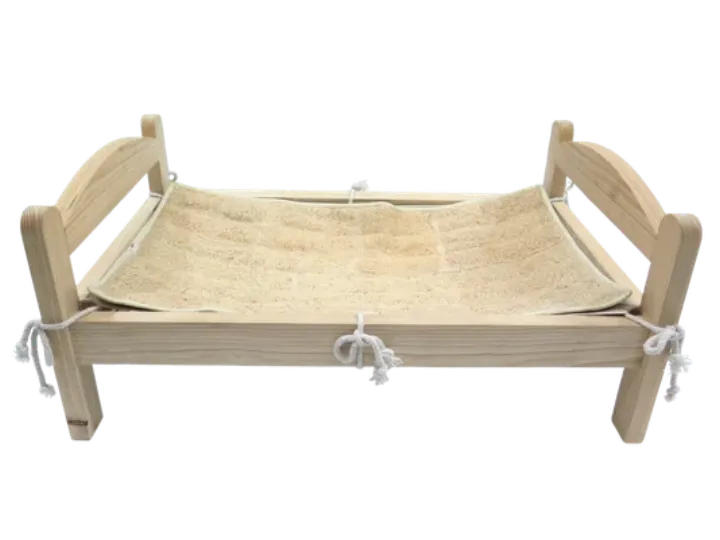
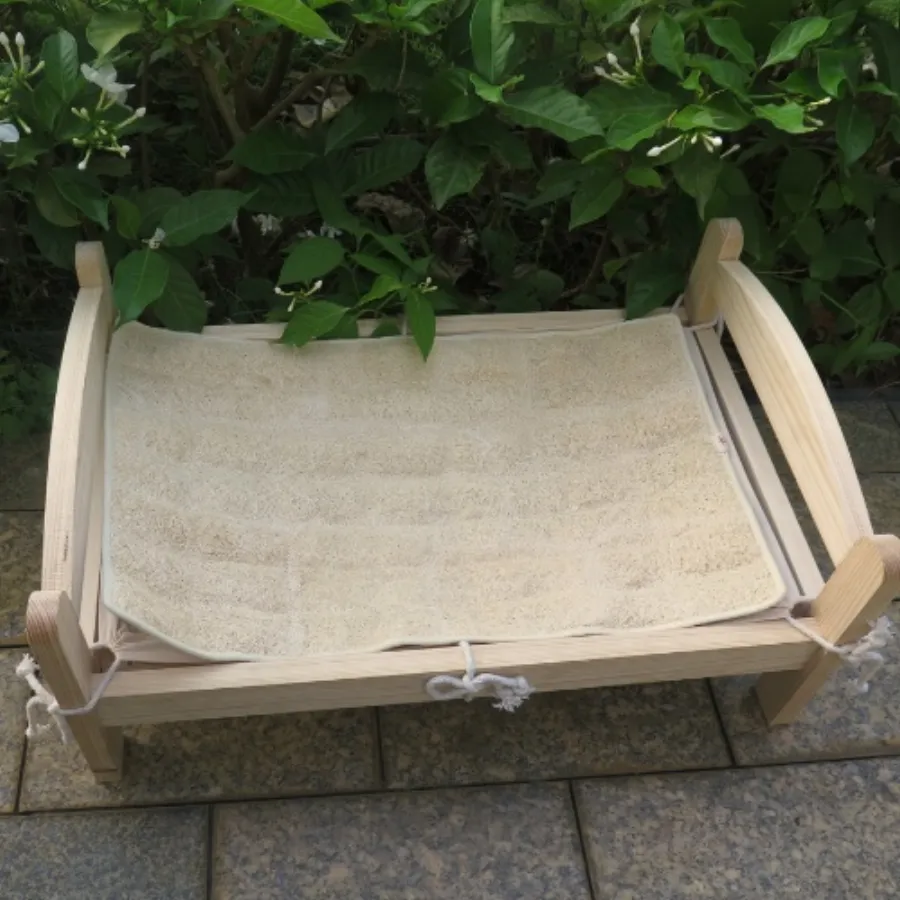
Our bed range covers five styles: elevated wooden-frame beds lined with loofah, woven seagrass, water hyacinth or rattan beds, cat caves, cat hammocks and two-tier wooden-frame beds. We answer these questions per model, and keeping beds dry in transit is covered in why water hyacinth pet beds go mouldy.
Questions about water hyacinth and pets
Is water hyacinth toxic to dogs and cats?
The ASPCA lists water hyacinth (Eichhornia crassipes) as non-toxic to dogs, cats and horses. The entry is about the plant, not about a finished bed or swallowed pieces.
Is water hyacinth the same as the hyacinth flower?
No. The garden hyacinth is Hyacinthus orientalis, in a different family, and the ASPCA lists it as toxic to dogs, cats and horses. Check the scientific name.
Is a water hyacinth bed safe for rabbits?
The ASPCA entry covers dogs, cats and horses only, so it does not answer this. Ask a vet who treats rabbits.
What if my pet eats part of a water hyacinth bed?
Contact your vet or the ASPCA Poison Control hotline at (888) 426-4435. The ASPCA notes that eating any plant material may cause vomiting and stomach upset in dogs and cats.
What is the minimum order for your woven pet beds?
100 pcs per item. Materials and sizes are confirmed per model.
Ask for current bed models
Tell us your market and the styles you sell. We will send current models with the materials for each.
Ask for a quote Natural pet beds
Comparing bed styles: elevated vs woven pet beds.