What natural dog toys can claim, and what they cannot
A natural dog toy can claim what it is made of, where the material comes from and how it is made, as long as each fact is specific and true. It should not claim "dental", "eco-friendly", "biodegradable", "safe" or "non-toxic" without evidence behind the exact word. A defensible listing describes the material and adds a supervision line.
- For Amazon sellers and private-label brands
- Coffee wood, hemp, loofah, coco coir
- About 7 minutes to read
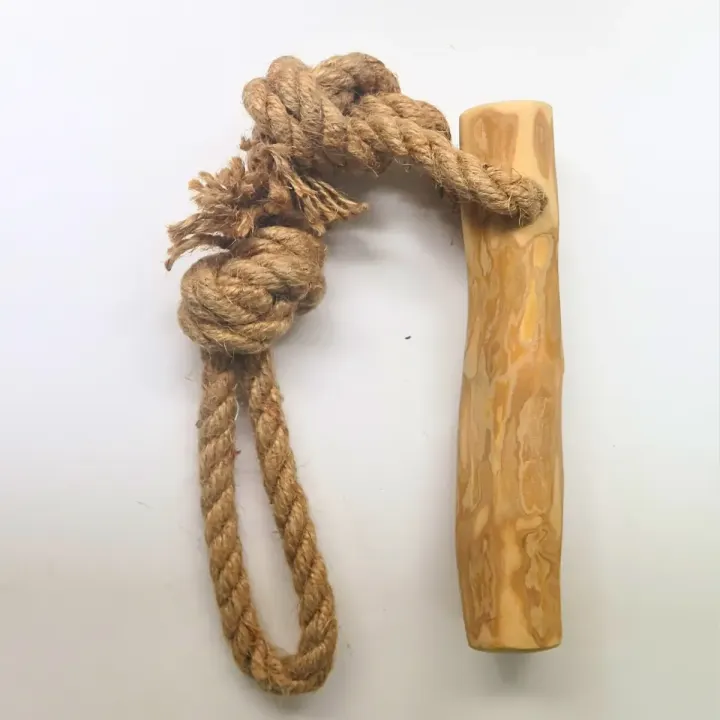
The claims at a glance
Use this table as a first filter. "Needs evidence" means you should hold a document that supports the exact wording before you print it.
| Claim | Can you use it? | What to write instead |
|---|---|---|
| "Made from coffee wood / hemp / loofah / coconut fibre" | Yes | Name the material plainly |
| "No chemicals are added in production" | Yes, for our goods | Use this exact sentence, not "chemical-free" |
| "Dental", "cleans teeth", "reduces tartar" | Needs evidence | Describe the texture |
| "Eco-friendly", "sustainable" on their own | No | A specific fact about the source |
| "Biodegradable", "compostable" | Needs evidence | Leave it out unless you hold a test |
| "Plastic-free packaging" | No, for goods in vacuum or poly bags | Say what the packaging is |
| "Indestructible", "chew-proof" | No | "Wears down gradually" |
| "Safe", "non-toxic", "vet-approved" | Needs evidence | Material facts plus a supervision line |
| "Lab tested" | Only with the named test | The lab, the standard and which product |
Can a natural chew be called "dental"?
Not without evidence. "Dental" tells the buyer the toy does something for the dog's teeth, which is a performance claim. The Veterinary Oral Health Council reviews product data and authorizes its seal for products "intended to help retard plaque and tartar on the teeth of animals"; the seal can be for plaque, calculus (tartar), or both (VOHC). That is the kind of evidence a dental claim implies. None of our materials holds that seal.
What you can do is describe the texture honestly. For coco coir we use: an occasional toy whose fibres brush between the teeth as the dog plays. That describes what happens physically and stops there. It does not promise cleaner teeth, fresher breath or less tartar, and you should not add those.
"Eco-friendly", "sustainable" and "biodegradable"
The US Federal Trade Commission's Green Guides say that "unqualified general environmental benefit claims are difficult to interpret and likely convey a wide range of meanings", and that "marketers should not make unqualified general environmental benefit claims." To qualify a claim, the guides call for "clear and prominent qualifying language that limits the claim to a specific benefit" (16 CFR 260.4).
In practice: drop the bare word and give the specific fact. For our coffee wood, the fact is that it comes from mature Robusta trees, over 20 years old, cleared at the end of their productive life to make way for new planting in the Central Highlands of Vietnam.
Biodegradable
"Biodegradable" sounds natural for wood or plant fibre, but it is a specific claim with a specific test. The Green Guides say a marketer needs "competent and reliable scientific evidence that the entire item will completely break down" within a reasonably short time after customary disposal, and that for items entering the solid waste stream an unqualified degradable claim is deceptive if they "do not completely decompose within one year after customary disposal" (16 CFR 260.8). We have not run that kind of test on any of our toys, so we do not make the claim, and we suggest you leave it out.
Packaging claims
Check the packaging copy as carefully as the product copy. Our coffee wood and shaped loofah ship in vacuum-sealed bags, and hemp and coco coir balls in poly bags; both are plastic. "Plastic-free" would be wrong, and we do not yet have an eco alternative to the vacuum bag. A kraft box or tag can be paper; say exactly which part is.
"Natural", "chew" and "toy"
"Natural" is safest when it is tied to the material: natural coffee wood, natural hemp fibre, dried loofah gourd, coconut fibre. Each of our materials can be described that way:
- Coffee wood: cut and dried, measured below 14% moisture at the core before vacuum packing. No chemicals are added in production.
- Hemp: hemp fibre balls and ropes, more durable than coco coir.
- Coco coir: machine-twisted coir rope, hand-knotted into balls and bones, with no glue.
- Loofah: gourds matured 6 to 9 months, dried and cut into shapes.
"Chew" is fine in a listing, but be clear it is not food. On our export documents a coffee wood chew is described as a wooden pet toy, because it is a toy, not food. If your listing sits near edible chews, a line such as "not edible, chew under supervision" avoids confusion.
"Durable", "safe" and "tested"
Keep durability comparisons relative and true: hemp is more durable than coco coir, and that is as far as we go. "Indestructible" invites every strong chewer to prove you wrong. More on matching materials to strong jaws in natural toys for heavy chewers.
"Safe" and "non-toxic" claim more than any single document shows. Instead, state the material and add three practical lines: supervise your dog while it chews, replace the toy when it has worn small enough to swallow, and remove any loose pieces or fibres.
"Tested" must name the test. Our SGS heavy-element test report covers coffee wood only, and the details are in what our SGS report covers, and what it doesn't. Hemp, coco coir and loofah have no lab test yet, so the coffee wood report cannot be used for them. We also do not offer FSC, BSCI, ISO or REACH, so none of those should appear on packaging made with us.
Origin and sourcing claims
Origin is one of the easiest true claims to make. Goods made by us are made in Vietnam, and in the US the country of origin has to be marked; how we handle that on bags and cartons is in Made in Vietnam origin marking.
For the EU, buyers sometimes ask about EUDR. Our wording is that it does not yet apply to this product line, and that we can show where the coffee wood is grown. We do not say "EUDR compliant". For a full sentence-by-sentence approach to listings, see how to write a natural dog chew listing without overpromising.
Questions sellers ask about natural toy claims
Can I call a coffee wood chew a dental chew?
Not without evidence. A dental claim implies proof of an effect on plaque or tartar, such as a VOHC seal, which our products do not hold. Describe the texture instead.
Can I say a natural dog toy is eco-friendly?
The FTC Green Guides advise against unqualified general environmental claims. State the specific fact, such as wood from coffee trees cleared for replanting.
Can I call a wooden or fibre dog toy biodegradable?
Only with test evidence that the whole item breaks down within the time the FTC Green Guides describe. We have no such test, so we do not make the claim.
Can I say your toys are chemical-free?
Use the exact sentence "No chemicals are added in production". It describes how the toys are made without overstating it.
Can I use your SGS report for hemp or loofah toys?
No. Our SGS report covers coffee wood only. Hemp, coco coir and loofah have no lab test yet.
Write your claims from the real product
Check every sentence against samples: your first 3 are free, you pay the shipping.