How to write a natural dog chew listing without overpromising
Describe what the chew is, where it comes from, how it is made and how big it is, then tell the owner how to use it. Leave out every word you cannot back up: "safe", "non-toxic", "indestructible", "vet-approved" and unqualified "eco-friendly". A listing built from provable facts gives the product less to fall short of, and that means fewer one-star reviews.
- For Amazon and marketplace sellers
- Coffee wood, hemp, loofah, coco coir
- About 6 minutes to read
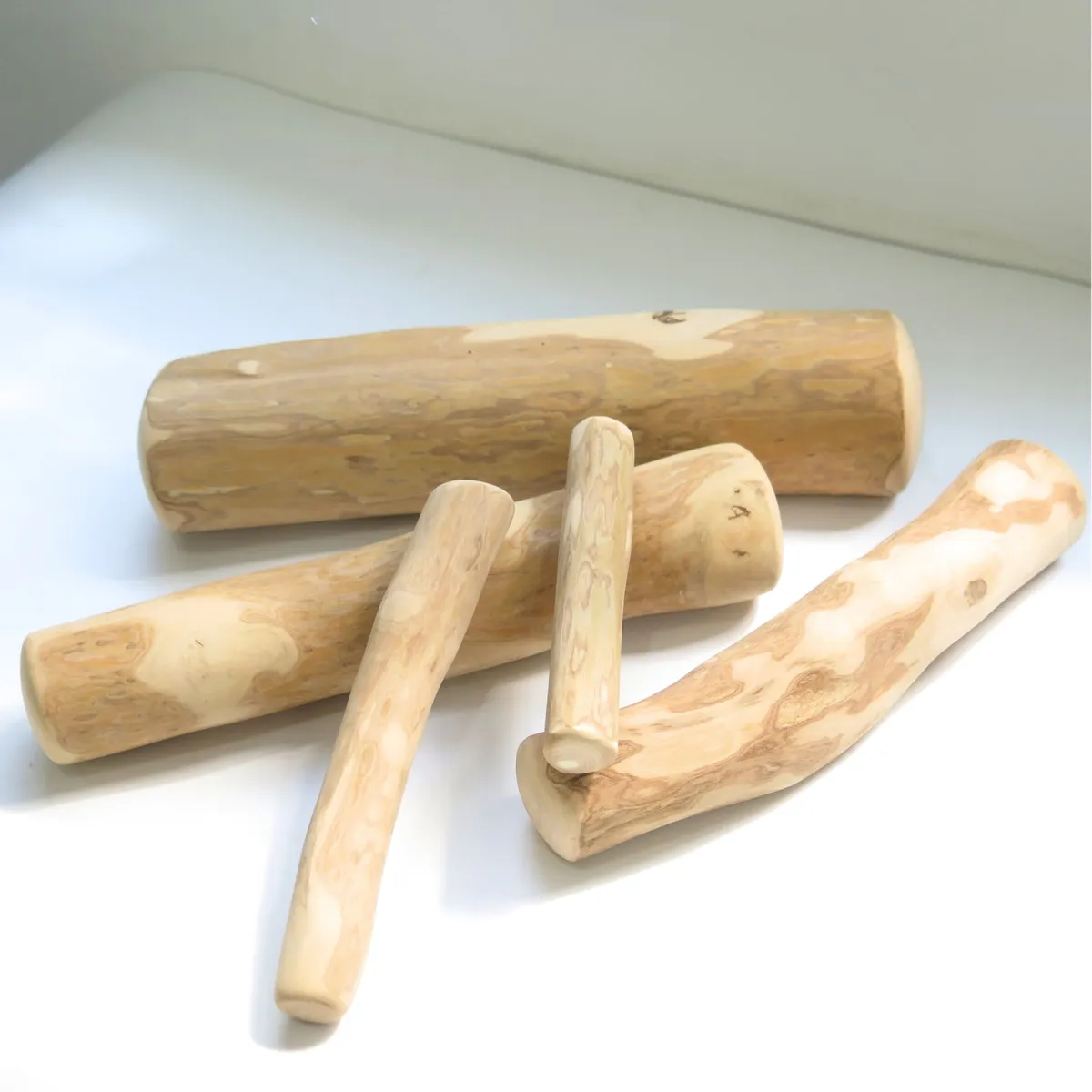
Why big promises cost you reviews
A review is a comparison between what the listing promised and what the dog did with the chew. Every claim you add raises the bar the product has to clear. "Lasts for months" turns a chew that lasted three weeks into a complaint. "Indestructible" turns any wear at all into a refund request.
We have seen this most clearly with coco coir. Coir is soft and frays quickly under a strong jaw; it works as an occasional toy whose fibres brush between the teeth. Sold as a tough chew, it collects one-star reviews, and after a few of those the seller gives up the listing. The product had not changed. The promise had.
The fix is to write the narrowest true description, and to say the limits before the customer finds them.
Words to drop, and what to write instead
Most overpromising comes from a short list of words. Each one claims more than a natural chew supplier can show.
| Avoid | Why | Write instead |
|---|---|---|
| "100% safe", "completely safe" | No chew is free of risk for every dog, and a marketplace or customer can ask you to prove it. | What the chew is made of, plus a supervision line (below). |
| "Non-toxic", "certified" | Claims more than any single test shows. | Name the exact test and section, if you have one, in the lab's own words. |
| "Indestructible", "chew-proof", "lasts for months" | Every natural material wears. How fast depends on the dog. | "Wears down gradually. Replace when it gets small." |
| "Vet-approved", "dental" | Needs a vet or a study behind it. | Describe the texture and shape. Let the owner draw conclusions. |
| "Eco-friendly" on its own | A general environmental claim with no detail (see the FTC note below). | The specific fact: farm byproduct, fruit grown in Vietnam, no chemicals added in production. |
For a wider list of claims by material, see what natural dog toys can and cannot claim.
Sentences you can prove, by material
These are the facts we stand behind for each line. Use them as the backbone of your bullet points.
Coffee wood
- "Coffee wood sourced from mature Robusta trees (20+ years) at the end of their productive life, cleared to make way for new planting — a byproduct of the natural farm renewal cycle in the Central Highlands of Vietnam."
- Natural wood; no chemicals are added in production. Moisture is measured below 14% at the core before vacuum packing. The reasons are in our guide to coffee wood moisture.
- Every stick has its own shape and grain.
- Sizes stated in centimetres, for example M at 17–18 cm long and 2.5–3.5 cm across. All six sizes are in coffee wood chew sizes, XS to XXL.
Hemp, coco coir and loofah
- Hemp: a stiff, hard-wearing fibre, more durable than coco coir. Stop there; we do not quote a multiple.
- Coco coir: "machine-twisted coir rope, hand-knotted into balls and bones". Describe it as an occasional toy, and say it is soft.
- Loofah: cut from dried, mature loofah gourds (6–9 months old) into animal and bone shapes.
We have no lab test for hemp or coco coir. Do not borrow wording from a coffee wood test for other materials. If you quote our coffee wood report, follow what our SGS report covers, and what it doesn't.
The safety lines every listing should carry
Owners expect a short, plain instruction, and it protects you when a dog chews harder than average. We suggest three lines, in this order:
- Supervise your dog while it chews.
- Replace the chew when it has worn small enough to swallow.
- Remove any loose pieces or broken fragments.
For coffee wood, add one more: "Natural wood slowly adjusts to the air in your home after the bag is opened. Small surface changes are normal." Vacuum sealing slows the exchange of moisture; opening the bag lets the wood balance with the room. Telling buyers this in advance turns a surprise into something they expected.
Do not give medical advice in a listing. If a customer asks whether a chew suits a dog with a health problem, send them to their vet.
Two traps specific to natural chews
The "eco" claim
The US Federal Trade Commission's Green Guides say that unqualified general environmental benefit claims are hard to interpret, and that "marketers should not make unqualified general environmental benefit claims" (16 CFR 260.4, FTC Green Guides). A specific, true fact carries more weight anyway. "Made from coffee trees cleared for replanting" tells the buyer more than "eco-friendly". Also check your packaging copy: our coffee wood ships in vacuum bags, which are plastic, so "plastic-free" would be wrong.
The "coffee tree" confusion
Customers sometimes find the ASPCA page titled "Coffee Tree" and worry. That page names Polyscias guilfoylei, family Araliaceae, also called Wild Coffee or Geranium-Leaf Aralia (ASPCA). It is a different plant from the Robusta coffee trees our wood comes from. Explain that calmly if asked, but do not turn it into a safety claim of your own. More on this in coffee wood, caffeine and the ASPCA "coffee tree".
A short checklist before you publish
- Each bullet states a fact you could show a marketplace if asked.
- Sizes are in centimetres, matched to the product code you ordered, not only to a size name.
- The supervision, replacement and loose-pieces lines are present.
- No "safe", "non-toxic", "indestructible", "vet-approved" or bare "eco".
- Photos show the real product, including the natural differences between pieces.
- Coir is described as soft and occasional, hemp as more durable than coir, nothing more.
How sets, barcodes and labels fit into the listing plan: selling natural dog chews on Amazon FBA.
Questions sellers ask about listing wording
Can I call a coffee wood chew safe for dogs?
We advise against it. Describe the material, the sourcing and the size, and add a supervision line; let the facts do the work.
Can I say the chew is eco-friendly?
The FTC Green Guides advise against unqualified general environmental claims. State the specific fact instead, such as wood from coffee trees cleared for replanting.
How long should I say a chew lasts?
Do not promise a number of days or weeks. It depends on the dog and the size; say the chew wears down gradually and should be replaced when small.
Do you have lab tests for hemp or coco coir toys?
No. Our SGS report covers coffee wood only, so do not apply its wording to other materials.
Can I use your product photos in my listing?
Once you have ordered, we take a set of photos of your goods for you to use. Before an order, please use your own photos of the samples.
Write your listing from the real product
Start with samples: your first 3 are free, you pay the shipping.