Coffee wood dog chews: why we measure moisture at the core, and why the limit is 14%
Moisture is the question buyers ask most about coffee wood, and the one most often answered with a number that means little. This guide explains where we measure, why our limit is below 14% and not lower, and what keeps that figure true between our warehouse and yours.
- For importers and Amazon sellers
- Coffee wood only
- About 6 minutes to read
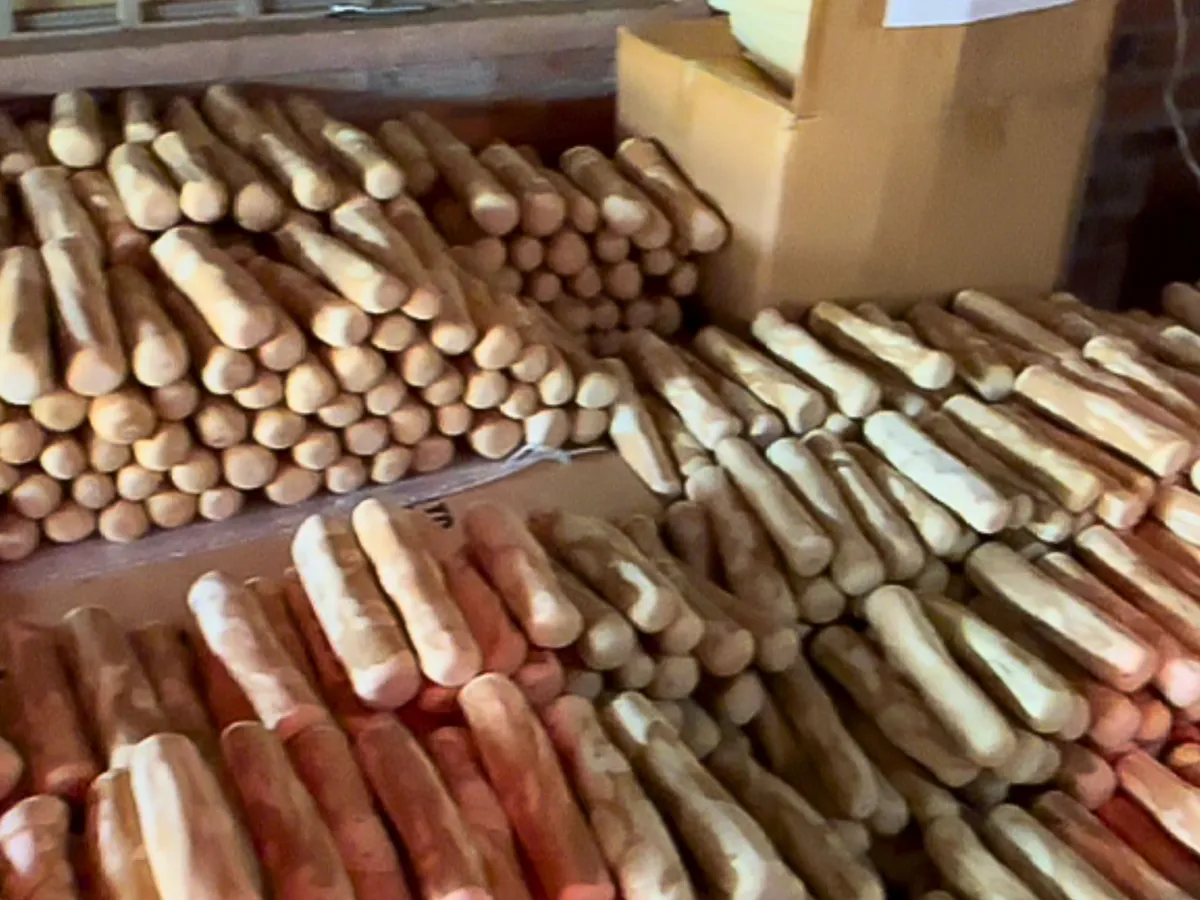
What a moisture figure is really for
When a buyer sends a specification with a moisture target, the number is rarely the point. In our experience the real worries are two: mould in the bag, and insects in the wood. A moisture limit is one tool against both, and it only works if three things are true at once: the wood is measured in the right place, the limit suits the size of the piece, and the dry wood is sealed so it cannot take moisture back.
Our coffee wood comes from mature Robusta trees (20+ years) cleared at the end of their productive life in the Central Highlands. We measure moisture below 14% at the core before vacuum packing. The rest of this guide explains each part of that sentence.
Why the core, not the surface
Wood dries from the outside in. A thick piece can read dry on the surface and still hold water at its centre, and that hidden moisture is what moves outward once the piece is sealed in a bag. A surface reading on a thick stick tells you about the surface only.
The gap matters most on the big sizes. Our XL sticks are 4.5–5.5 cm across and XXL sticks 5.5–8 cm, against 1.5–2 cm for XS. The thicker the piece, the further the centre is from the air, and the more a surface reading can flatter it. That is why our limit is stated at the core. Full dimensions for every size are in coffee wood chew sizes, XS to XXL.
Why below 14%, and not 10–12%
Some specifications ask for 10–12% at the core. It sounds safer. For natural coffee wood it is not.
Drier wood cracks more
Coffee wood is already dense and hard. Pulling it down to 10–12% makes the large sizes crack heavily. Small sizes such as S and M can reach that range; large sizes cannot without heavy cracking. A single low number promised for every size would be a promise we could not keep, so we commit to one figure across the range: below 14%.
Furniture timber is a different product
Industrial timber can reach 6–8% because it is treated with chemicals and dried under pressure. Our chews are natural wood with no added chemicals, and we do not add a pressure-stabilising step after drying. If a specification was written for timber or engineered wood, it will not fit a natural chew, and it is worth asking where the number came from: a customs rule in your market, or a figure found online.
Heat cracks wood too
Cracking can start from around 40 °C, depending on how much moisture the wood still holds. A sealed vacuum bag limits it. Keep cartons away from heat in storage, and remember that a container standing in the sun gets hot inside.
Vacuum packing is what keeps the number true
A moisture reading taken in our warehouse describes the wood on that day. Without a barrier, the same piece absorbs moisture again on a sea voyage in the rainy season or in a humid warehouse, and the reading no longer means anything. Vacuum sealing slows the exchange of moisture between the wood and the air, so the figure we measured is still close to true when the bag reaches you.
- Coffee wood is vacuum-sealed, 1, 2 or 3 pieces per bag, with a desiccant pack inside.
- Kraft bags and cartons are not a moisture barrier. Packed that way alone, wood cracks about as much as unpacked wood.
- Without vacuum packing, the crack rate increases by 15–20%, and more in Vietnam's dry season.
- We do not yet have an eco-friendly alternative to the vacuum bag. If one appears, we will say so.
- After opening, the wood slowly balances with the room. That is normal behaviour for natural wood, not a defect. Tell your customers so in your listing or insert.
How the bag, tag and labels go together for Amazon sellers: packing natural pet toys for FBA, by material.
Cracks: agree the level before you pay
Natural wood will show some cracks, and a buyer should know the accepted level before paying a deposit, not after a complaint. The accepted crack rate depends on the sizes in your order and is written on the proforma invoice before you pay a deposit. Size tolerances in centimetres are a separate line on the same proforma.
Moisture is also not the same question as heavy metals. For that, see what our SGS coffee wood test covers.
Questions to ask any coffee wood supplier
- Where is moisture measured: at the core or on the surface?
- Is the limit the same for every size, and can large sizes really reach it without cracking?
- Is the wood vacuum-sealed, and is there a desiccant in the bag?
- What crack rate is accepted for my sizes, and is it written on the proforma invoice?
- Are any chemicals or pressure treatments used after drying?
- What happens if the wood is not dry by the shipping date: do you ship anyway, or tell me and wait?
A supplier who holds wet wood back and tells you early is protecting your reviews. More checks for a new supplier are in sourcing natural pet toys from Vietnam instead of China.
Questions buyers ask about coffee wood moisture
What moisture level is your coffee wood packed at?
We measure moisture below 14% at the core before vacuum packing.
Can you dry the wood to 10–12%?
Small sizes such as S and M can reach that range, but large sizes crack heavily when dried that far. We commit to one figure across all sizes: below 14% at the core.
Why does the wood change after I open the bag?
Vacuum sealing slows moisture exchange. Once the bag is opened, natural wood slowly balances with the air in the room. That is normal, not a defect.
Do you add chemicals or pressure-dry the wood?
No. Our chews are natural coffee wood with no added chemicals, and we do not add a pressure-stabilising step.
How much cracking is accepted?
The accepted crack rate depends on the sizes in your order and is written on the proforma invoice before you pay a deposit.
See the wood for yourself
Start with samples: your first 3 are free, you pay the shipping.
Ask for samples Coffee wood chews
Shipping terms for a first order: FOB, CIF or DAP for a small mixed order.