
How to clean natural dog toys made of loofah, hemp and coco coir
Start with the care instructions on the toy's tag or packaging: that is the first rule in CDC guidance on cleaning pet supplies. Where a toy has no instructions, the CDC groups rope toys with soft items and lists a washing machine and dryer. For loofah, hemp and coir toys we do not publish a washing method of our own, so the honest plan for a seller is to test a method on samples, print it on the tag, and tell owners to throw out a toy that is dirty, damp for too long, or coming apart.
- For pet shops and Amazon sellers
- Loofah, hemp and coir toys
- About 6 minutes to read
What official guidance says about cleaning pet toys
The US Centers for Disease Control and Prevention has a short page on cleaning and disinfecting pet supplies. Its first point is simple: "Most pet items have cleaning instructions on the packaging or tags. Follow the cleaning instructions."
For items with no instructions, the page splits goods into two groups. Hard items such as bowls, rubber toys and plastic toys get soapy water and a disinfectant. Soft items, "such as blankets, beds, clothes, plush toys, and rope toys", get a washing machine and dryer.
The page also gives an example schedule. For toys it reads "Pet toys: Clean every month", and it adds: "You can clean more often if needed, especially if the pet item looks dirty or smells bad." For things that cannot be cleaned, its advice is to "throw them away when they look dirty."
This is general CDC guidance for pet supplies, as read in November 2026. It does not name loofah, hemp or coir.
Why there is no single washing method for these materials
Loofah, hemp and coir are three different plant fibres, built three different ways:
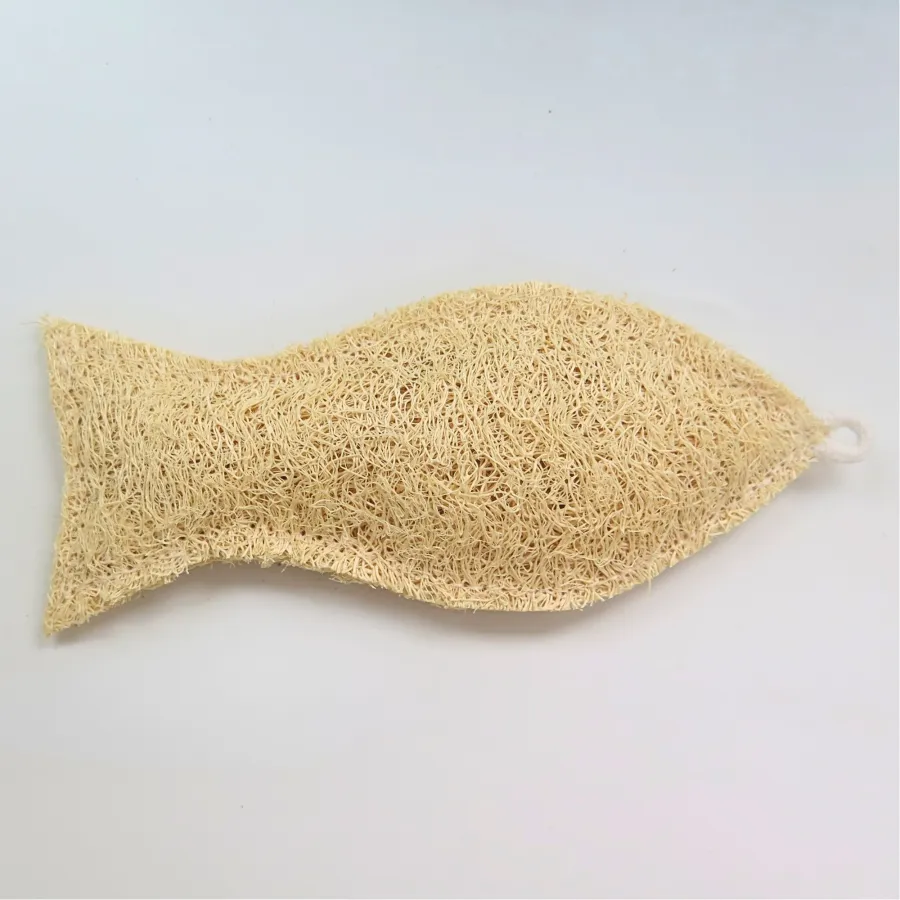
- Loofah toys are cut from dried, mature loofah fruit, picked at 6–9 months, into shapes such as a bone, a fish or a duck.
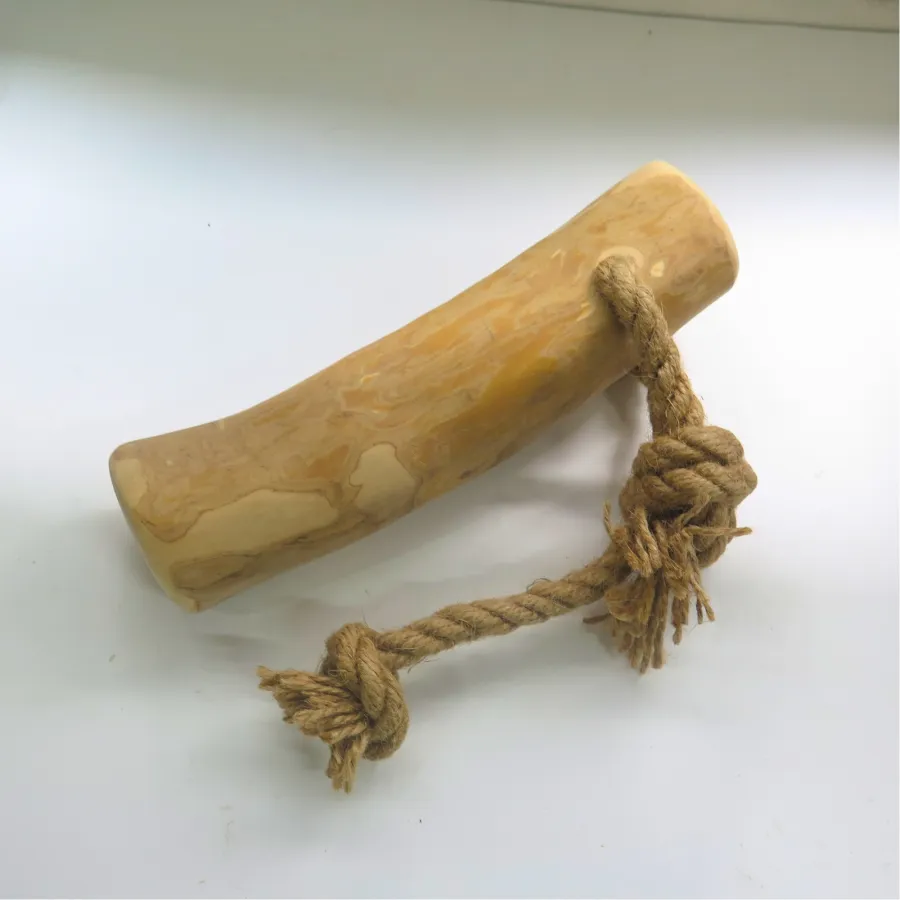
- Hemp toys are balls and knotted ropes. Hemp is more durable than coco coir.
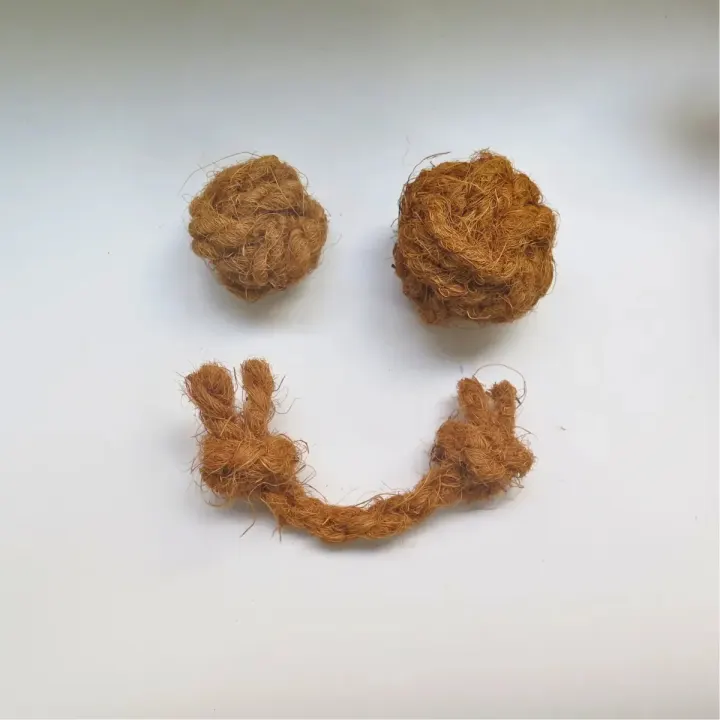
- Coco coir toys are machine-twisted coir rope, hand-knotted into balls and bones, with no glue. Coir is soft and frays fast under strong jaws; we position it as an occasional toy.
We do not publish washing instructions for any of the three, and we have no lab test for hemp or coir. So we will not tell you that a loofah fish or a coir ball comes through a washing machine in good shape. The CDC's soft-item advice is a reasonable starting point to try, and a sample is the place to try it.
Moisture is the part to get right
Whatever cleaning method a customer uses, a plant-fibre toy that stays wet is a problem. The US Environmental Protection Agency puts it plainly: "There are many types of mold, and none of them will grow without water or moisture" (EPA, A Brief Guide to Mold, Moisture and Your Home). The same guide advises drying wet items "within 24-48 hours to prevent mold growth."
For a care note, that means one clear line: if the toy gets wet, dry it fully before it goes back in the toy box. A toy that stays damp, smells musty or shows spots belongs in the bin.
Woven beds face the same moisture question; see why woven pet beds go mouldy.
When to throw a toy away instead of cleaning it
Cleaning only makes sense for a toy that is still whole. Tell customers to replace a natural toy when:
- it is fraying, coming apart, or has worn down small;
- it stays damp, smells musty or shows spots;
- it looks dirty and a cleaning method has not been tested for it.
Rope and fibre toys need supervised play, as any rope toy does. If a customer says their dog swallowed fibres, the answer is to contact a vet; we cover what a seller should say in a customer says their dog swallowed rope fibres.
Write the care note before you print the tag
Since the CDC's first advice is to follow the instructions on the tag, the tag is where your care advice lives. Our standard tag is 5 × 9 cm and goes inside the bag, and we print your own text if you send it.
A simple way to get there:
- Order samples. Your first 3 are free; you pay the shipping.
- Try the method you want to recommend on one sample of each material, and dry it fully.
- Look at the result: shape, knots, fibre, smell.
- Write only what you tested. If nothing passed, say "spot clean only" or "replace when dirty".
Here is a starting point you can adapt once you have tested it:
Natural plant fibre. Supervise your dog during play. Keep the toy dry; if it gets wet, dry it fully. Replace the toy when it is dirty, damp for long, fraying or worn small.
Keep claims modest on the listing too. Our note on what natural dog toys can claim covers the words that invite trouble.
Questions about cleaning natural dog toys
Can you put a hemp or coir rope toy in the washing machine?
CDC guidance lists rope toys with soft items cleaned in a washing machine and dryer when a toy has no instructions of its own. We have not published a washing method for our hemp or coir toys, so test it on a sample before recommending it.
How often should natural dog toys be cleaned?
The CDC's example schedule says to clean pet toys every month, and sooner if a toy looks dirty or smells bad. Toys that cannot be cleaned should be thrown away when they look dirty.
Can loofah dog toys get mouldy?
Any plant fibre that stays wet can. EPA notes that mould will not grow without water or moisture, so dry a wet toy fully and replace one that smells musty or shows spots.
When should a natural dog toy be replaced?
When it frays, comes apart, wears down small, stays damp, or looks dirty and cannot be cleaned. Supervise play with any rope or fibre toy.
Can you print our care instructions on the tag?
Yes. Send your text and we print it on the tag, which goes inside the bag. Our standard tag is 5 × 9 cm.
Test your care note on real samples
Pick any three loofah, hemp or coir toys to test. Your first 3 are free; you pay the shipping.