Coffee wood vs antler, bully sticks and nylon: which chew suits which customer
These four chews answer different needs. A bully stick is a treat the dog eats. Antler, nylon and coffee wood are chewed and worn down, not eaten, and they differ in origin and feel. Coffee wood suits shoppers who want a plant-based, non-edible chew, with no chemicals added in production. None of the four is right for every dog, and none should be given without supervision.
- For pet shops and Amazon sellers
- Four chew types compared
- About 6 minutes to read
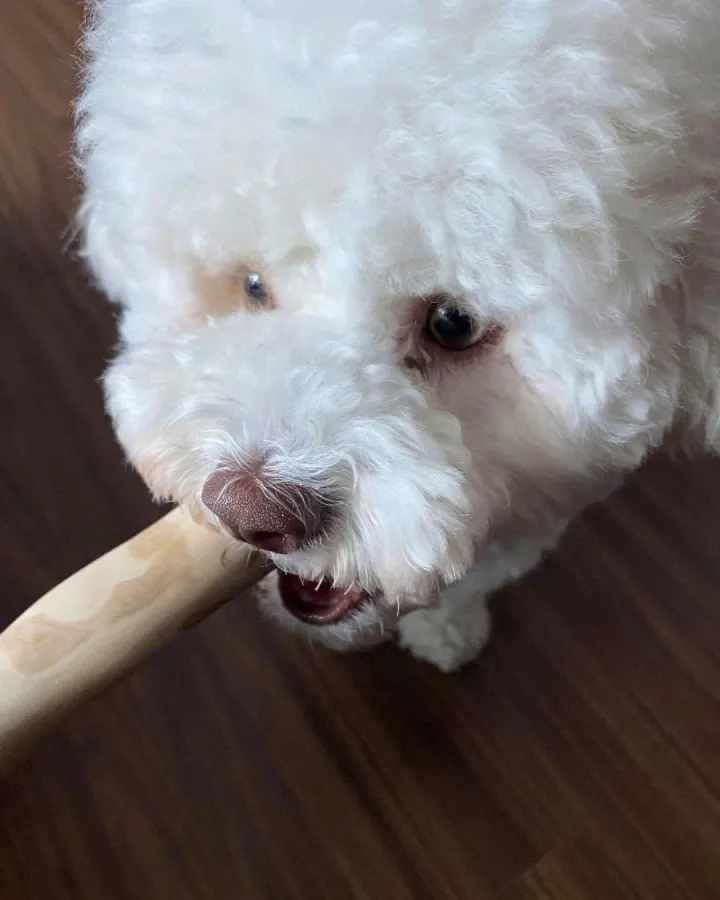
The short version for your shelf
We make coffee wood chews, not antler, bully sticks or nylon toys. So this comparison does not rank the other three. It sets out what each one is and what customers usually ask about it, so you can place coffee wood next to them and describe it fairly.
| Chew | What it is | Eaten or chewed? | What customers usually ask |
|---|---|---|---|
| Coffee wood | Wood from old Robusta coffee trees, cut and dried | Chewed, not eaten | Does it splinter or crack? How long does it last? |
| Antler | Naturally shed antler from deer or similar animals | Chewed, not eaten | Is it too hard? Does it smell? |
| Bully stick | A dried beef product sold as a treat | Eaten | How fast is it gone? How much does it smell? |
| Nylon chew | A moulded synthetic chew, often flavoured | Chewed, not eaten | Is it natural? What happens to the pieces? |
The descriptions of antler, bully sticks and nylon are general. Ask your own supplier for the specification of the product you stock.
What coffee wood actually is
Our coffee wood comes from mature Robusta trees, 20 years old or more, cleared at the end of their productive life so the farm can replant. It is a byproduct of the farm renewal cycle in the Central Highlands of Vietnam. Coffee is a long-lived farm crop, not forest timber.
We strip the bark, keep the centre of the trunk and cut off cracked or rotten ends. The wood is cut and dried; no chemicals are added in production, and we do not add a pressure-stabilising step. On our export documents a coffee wood chew is described as a wooden pet toy, because it is a toy, not food.
Every stick has its own shape and grain. Six sizes run from XS (10–11 cm, 23–30 g) to XXL (22–23 cm, 325–600 g); the full table is in coffee wood chew sizes, XS to XXL. For dogs that want a heavier piece, Gorilla coffee wood is the same wood cut as short, thick blocks, 8–16 cm long and about 155 g to 1.1 kg.
Coffee wood vs antler
Both are natural, both are chewed rather than eaten, and both are sold to owners who want something that lasts longer than a treat. The difference is origin. Antler is an animal product; coffee wood is a plant product. Some shoppers prefer a plant-based chew for that reason alone, and that is a fair point to put in a listing.
Hardness is the question customers raise most about very hard chews of any kind. We have no measurements comparing coffee wood and antler on hardness or tooth wear, and we will not invent a ranking. What we tell buyers is simpler: offer the right size for the dog, and tell owners to watch the first sessions.
One practical difference for importers: coffee wood ships as a plant product, and we arrange a phytosanitary certificate when the importing country requires one. Animal-origin chews follow their own import rules, which we do not handle. Ask your customs broker if you stock both.
Coffee wood vs bully sticks
This is the clearest split of the four. A bully stick is food. The dog is meant to eat it, it is gone when it is finished, and buyers judge it as a treat: smell, ingredients, how long it keeps a dog busy.
Coffee wood is not food and is not meant to be eaten. It wears down with chewing and is replaced when it gets small. That makes it a different purchase for the customer, closer to a toy than a snack. Many shops stock both: a treat for a reward, a chew for long sessions. If you put them side by side, label the coffee wood clearly as a chew toy, so nobody buys it expecting a treat.
Coffee wood vs nylon
Nylon chews are uniform. Every piece in a size looks and weighs the same, which some buyers like for listings and photos. Coffee wood is the opposite: each stick has its own shape, colour and grain, and weight moves within each size range. Say so in your listing, and customers expect a natural piece rather than a moulded one.
The other difference is material. Shoppers who look for natural, plant-based products often skip synthetic chews, and coffee wood speaks to them directly. If your range is built on that customer, coffee wood fits; if your customer wants identical pieces, nylon may fit better. Both are honest positions.
The limits of coffee wood, said plainly
- It is natural wood, so it can crack. Heat makes it worse: cracking can start from around 40 °C, depending on the moisture left in the wood. Vacuum packing limits it. Why it happens and how to answer a review: why coffee wood chews crack.
- Our lab report covers coffee wood only. It is an SGS heavy-metal test to ASTM F963-23. What it does and does not cover: our SGS coffee wood test.
- No chew suits every dog. We do not publish a size chart by dog weight.
What to tell your customers, whichever chew they choose
The same safety advice applies to all four. Cornell University's Riney Canine Health Center advises owners to "supervise your dog during playtime to prevent ingestion of inappropriate items" and to avoid "items that can be easily swallowed, such as small bones or small toys."
- Supervise the dog while it chews.
- Choose a size the dog cannot fit whole in its mouth.
- Replace the chew once it has worn small.
- Throw away any piece that breaks off.
- For questions about a particular dog's teeth or health, ask a vet.
More on the safety question itself: is coffee wood safe for dogs?
Questions buyers ask about coffee wood and other chews
Is coffee wood edible like a bully stick?
No. Coffee wood is a chew toy, not food, and is described as a wooden pet toy on our export documents. It wears down with chewing and should be replaced when it gets small.
Is coffee wood softer or harder than antler?
We have no measurements comparing the two, so we do not rank them. Offer a suitable size and tell owners to supervise the first sessions.
Why choose coffee wood over nylon?
For shoppers who want a plant-based chew with no chemicals added in production. Each stick is unique in shape and grain; nylon suits buyers who want identical pieces.
Do you also make antler or bully sticks?
No. We make coffee wood chews and hemp, loofah and coco coir toys, plus natural pet beds. You can combine these in one mixed order.
Which coffee wood size should a shop start with?
Take a few sizes as samples and see how your customers' dogs use them. The size table is in our coffee wood sizes guide; we do not publish sizes by dog weight.
Put coffee wood next to your other chews
Start with samples: your first 3 are free, you pay the shipping.