
Five-step QC for natural chews: what a buyer should ask
Our basic quality control for natural chews and toys runs in five steps: raw material, in-process, semi-finished, final product and pre-shipment. The steps can differ from order to order, but one thing stays fixed: every check compares the goods with the sample you approved. As a buyer, your job is to agree that sample clearly and ask for proof at the two steps you can see from outside, final product and pre-shipment.
- For importers, shops and Amazon sellers
- Coffee wood, hemp, coir, loofah
- About 6 minutes to read
Start with the reference: the approved sample
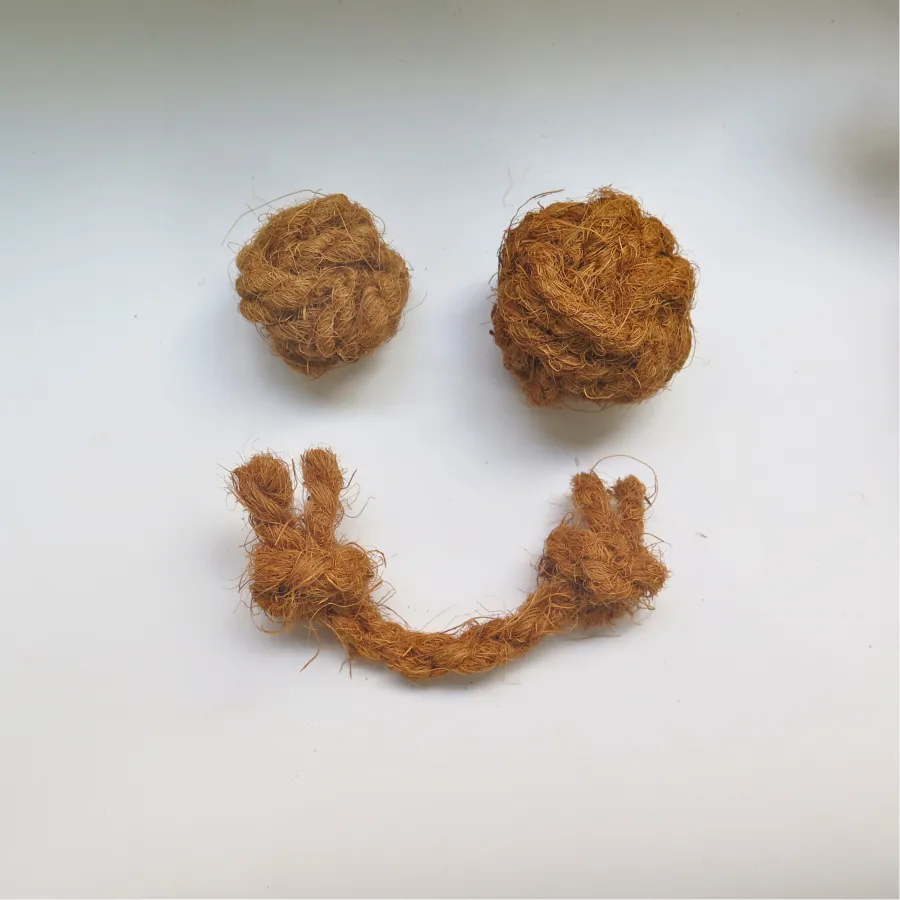
Natural materials never match a drawing. A coffee wood stick has its own shape and grain, a hemp ball is handmade and varies a little in size, and coir fibres stray. So a QC check cannot ask "is it identical?". It asks "is it within what the buyer approved?".
That reference is the sample you approved, either in hand or from photos and video. We keep a QC file for each product. If you have not approved a sample yet, begin there: what to check in natural chew samples.
Name every product by its code, not only its size name. Size names differ between buyers, and one step of difference can put a whole order in the wrong bags. We pack by code.
The five steps at a glance
| Step | What it is for | What you can ask for |
|---|---|---|
| 1. Raw material | Only suitable material goes into production | What is rejected, in plain words |
| 2. In-process | Shape and size are caught early | Confirmation that sizes are cut to your codes |
| 3. Semi-finished | Pieces are checked before packing | Questions on anything you saw in the sample |
| 4. Final product | Finished, packed goods match the sample | Photos of the first packed unit |
| 5. Pre-shipment | Cartons, marks and counts match the documents | Carton photos and draft documents |
Steps 1 to 3 happen inside the factory and are ours to run. Steps 4 and 5 are where your own eyes, through photos and documents, add value.
Step 1. Raw material
For coffee wood, the material comes from mature Robusta trees, 20 years and older, cleared to make way for new planting. Sections that are bored by insects, hollow, bent or deeply cracked are left out. The bark comes off, the core is used and the cracked or rotten ends are cut away.
A fair question for any supplier is what they reject at this step and why. A clear answer tells you they know their material. You do not need their internal limits, and we do not publish ours.
Steps 2 and 3. In-process and semi-finished
During production, pieces are cut and shaped to the size codes in your order, and the checks catch size and shape problems before they reach a bag. Coffee wood sizes are set in centimetres with tolerances in centimetres, as listed in coffee wood chew sizes. Coir is machine-twisted into rope and hand-knotted into balls and bones with no glue, and hemp balls are handmade, so for these two the approved sample decides what is acceptable.
Before coffee wood is packed, surface dust is cleaned off thoroughly, and moisture is measured below 14% at the core, one figure for every size. The reasoning is in why we measure moisture at the core.
Step 4. Final product: the first packed unit
The rule here is simple. We pack one sample unit first, you confirm it, and only then do we pack the order. For FBA cartons we label one carton as a test, you approve it, and then we label the rest.
What to look at on that first unit:
- The product code and size label on the outside of the bag.
- Your tag sealed inside the bag, and the suffocation warning on every bag, on the same side as the barcode.
- Barcodes match the ones you created and sent us, one code per size.
- For coffee wood: the vacuum is tight and a desiccant pack is inside.
Send tags, barcodes and labels early. We count packaging materials as soon as they arrive.
Step 5. Pre-shipment
Before cartons are taped, we photograph the inside of the cartons. Ask for those photos. Check that the codes in the photos match the carton marks and the packing list, and that the shipping marks follow either our standard four lines or the form you sent.
Then review the draft documents. We send draft documents for your approval before the originals on every shipment. The step-by-step view of the loading itself is in container loading check.
Cracks, storage and claims
Natural wood shows some cracks. The accepted crack level is written on the proforma invoice before you pay a deposit. At your end, keep coffee wood in its vacuum bag until it is sold, away from heat of 40 °C and above.
Film the unboxing when the goods arrive. If real defects go beyond what was agreed, such as deep cracks through the whole piece, hollow pieces or sizes that differ from your order, we make up the part beyond the agreed level in your next shipment. What to write on the proforma before you pay is in proforma invoice checklist.
Questions buyers ask about QC
What are the five QC steps?
Raw material, in-process, semi-finished, final product and pre-shipment. The steps can differ from order to order.
What is the bulk order checked against?
The sample you approved, in hand or from photos and video.
Can I see the goods before they are packed in bulk?
We pack one sample unit first and you confirm it before we pack the order. For FBA cartons we label one test carton for your approval.
Will I get photos before shipping?
We photograph the inside of cartons before they are taped. Ask for those photos along with the draft documents.
What if defects go beyond what was agreed?
Film the unboxing. Real defects beyond the agreed level are made up in your next shipment.
Set your reference first
Every check starts from an approved sample: your first 3 are free, you pay the shipping.
Ask for samples Coco coir toys
Tell us the codes, your market and your broker's document list when you ask for a quote.