Is loofah safe for cats? What we know, what we do not, and what to tell customers
Loofah cat toys are cut from dried gourd fibre. We know of no veterinary study on cats chewing loofah, so no seller can honestly call it safe for every cat. What a seller can say: it is a natural plant toy for play, not food, and it should be used under supervision and thrown away once a cat starts tearing pieces off.
- For pet shops and Amazon sellers
- Loofah cat toys
- About 5 minutes to read
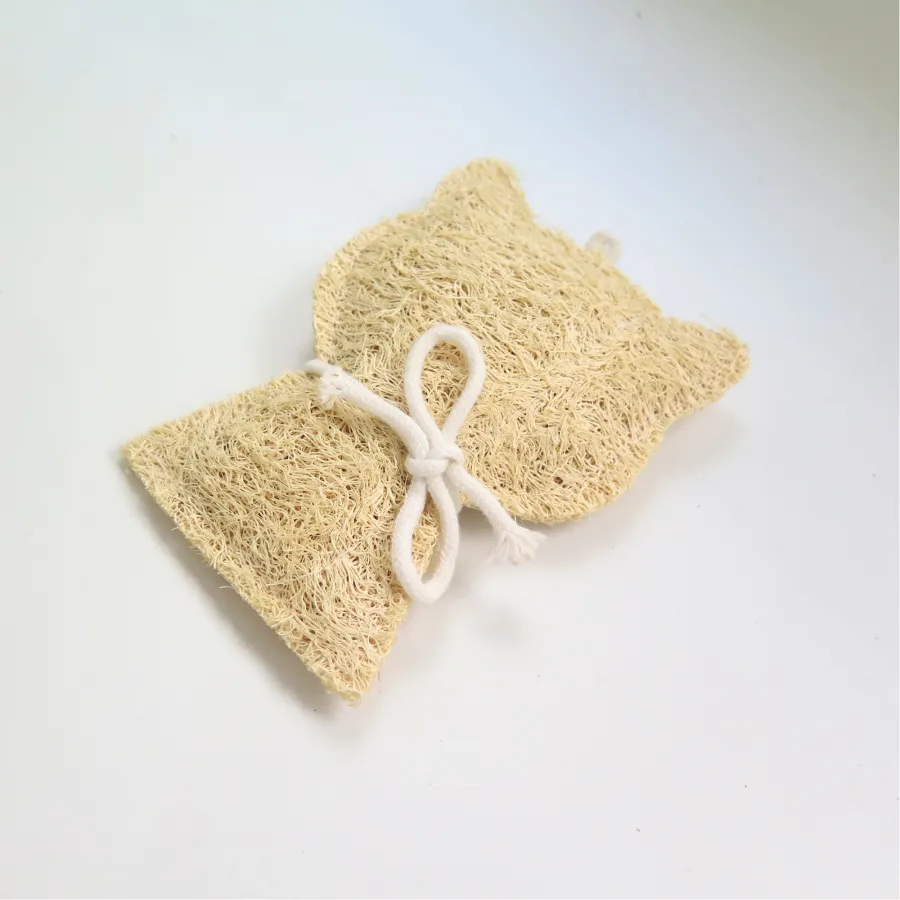
What a loofah cat toy is made of
Loofah, also spelled luffa, is a gourd that grows on a vine. Left on the vine until it is fully mature and dry, its flesh turns into a tough network of fibres. Our gourds mature 6 to 9 months, sometimes longer, before processing. The dried gourd is then cut into shapes, 11.5 to 15 cm long.
That is the whole toy: one natural material, cut to shape. Our current shapes include Cat and Kitty, alongside Teddy Bear, Fish, Bone and Duck. The full route from field to bag is in loofah pet toys, from the field to the finished toy.
Is it safe? The honest answer
We cannot point you to a veterinary study on cats and loofah, because we have not found one. Shops selling loofah cat toys online say different things, from "fine to digest" to "call your vet if swallowed", and none of those claims comes with a source. We would rather tell you that than add one more claim to the pile.
What we can say with confidence is limited and useful:
- It is a plant material. Dried gourd fibre, cut to shape.
- It is a toy, not food. Cats bat, carry and bite it. It is not made to be eaten.
- It is light. A loofah shape is not a dense chew and will not last like one.
- We hold no lab test for loofah. Our only lab report covers coffee wood. If your market needs a test for loofah, tell us before ordering; new tests are paid by the buyer who needs them.
Which pet a shape suits, and how long it lasts in play, we would rather you learn from samples than from our adjectives. Give samples to the kind of cats your customers own and watch.
What if a cat swallows pieces?
This is the real worry behind many "is it safe" questions, and it is a veterinary one. A seller should not guess the answer for a customer's cat. The right reply is to contact a vet, and sooner rather than later if the cat seems unwell.
One point is worth knowing when you choose and describe cat toys in general. The Merck Veterinary Manual notes that "cats are more likely to develop intestinal obstruction from a linear foreign body", meaning string-like items. So if any cat toy you sell carries a cord, ribbon or loop, that part deserves the same attention as the toy itself. The same manual warns that a string-like object found in the mouth "must never be pulled". Tell customers to call their vet instead.
For the matching customer-service question on dogs and rope toys, see what to tell a customer whose dog swallowed rope fibres.
Wording you can use in a listing or on an insert
Keep the claims to what the toy is, and the advice to what the owner can do. A version you can adapt:
Natural loofah toy, cut from dried loofah gourd. Each piece is slightly different. This is a play toy, not food. Supervise your cat during play. Remove the toy once pieces start to come off, and throw away loose bits. If you think your cat has swallowed part of a toy, contact your vet.
Phrases to avoid unless you hold evidence: "safe if swallowed", "digestible", "cleans teeth", "vet approved", "non-toxic". More on claims for natural toys in what natural pet toys can claim.
Keep the toys dry, in the warehouse and at home
Loofah is a plant fibre, and plant fibre that stays damp can grow mould. The US Environmental Protection Agency puts it simply: "There are many types of mold, and none of them will grow without water or moisture" (EPA, A Brief Guide to Mold, Moisture and Your Home).
Our shaped loofah toys are vacuum-sealed, 1, 2 or 3 pieces per bag, with a size sticker on each bag. Keep them in the sealed bag until sale. We have not tested whether loofah toys can be washed and dried at home, so we make no washing claim. If a toy gets wet or dirty, the cautious advice to owners is to replace it.
Stocking loofah for cats
- Shapes: Cat and Kitty are the obvious fit for a cat aisle; ask us for current shapes before you plan a range.
- Sets: 1, 2 or 3 pieces per bag, so you can sell singles or sets.
- Your brand: a kraft or eco cardboard tag inside the bag, standard 5 × 9 cm.
- Minimum: 50 pcs per item, and sizes can be split.
Display ideas and the cat range in more detail: loofah cat toys wholesale.
Questions buyers ask about loofah toys for cats
Is loofah safe for cats to chew?
We know of no veterinary study on it, so we do not call it safe for every cat. It is a natural plant toy for play, not food; tell owners to supervise and remove it once pieces come off.
Can cats digest loofah?
We have no source that answers this. If a customer's cat swallows part of a toy, the advice is to contact a vet.
Do loofah toys clean cats' teeth?
We have seen no evidence for that claim, so we do not make it and suggest you leave it out of listings.
Are your loofah toys tested?
Not yet. Our only lab report covers coffee wood. If you need a test for loofah, tell us before ordering; new tests are paid by the buyer who needs them.
Which loofah shapes do you make for cats?
Current shapes include Cat and Kitty, plus Teddy Bear, Fish, Bone and Duck, 11.5 to 15 cm long. Ask us for the current list.
Try them with real cats first
Start with samples: your first 3 are free, you pay the shipping.