Loofah chews for rabbits and guinea pigs: what sellers can say
Rabbits and guinea pigs need to chew, because their teeth grow continuously, and veterinary guidance puts hay first for wearing them down. Loofah can be offered as an extra chew item, but we have found no veterinary source that addresses loofah for small pets, and we hold no test on it. Sell it as what it is, a dried plant fibre shape, tell owners to keep hay as the base, and to remove the toy once it is damaged.
- For pet shops and Amazon sellers
- Rabbits, guinea pigs, small pets
- About 5 minutes to read
Why small pets need to chew
The Merck Veterinary Manual explains that "dental disease is common in rabbits because all of their teeth grow continuously", and that "eating plenty of hay helps wear the teeth down and lowers the risk of developing dental problems." The same manual notes that guinea pigs' teeth also grow continuously, and lists "insufficient chewing (not enough hay)" among the causes of overgrown, misaligned teeth.
The RSPCA's guide to enrichment for rabbits adds that "chewing is a natural behaviour that helps to keep rabbit teeth the right length, shape and size, avoiding dental problems", and suggests chew items such as "wooden chew toys or sticks designed for rabbits."
Notice the order. Hay is the main tool for teeth. A chew toy is enrichment on top of it. A listing that turns a toy into a dental product reverses that order, and it is a claim no toy seller can support.
Is loofah safe for rabbits?
We cannot answer that with a source, and we would rather say so. Neither Merck's rabbit dental page nor the RSPCA enrichment guide mentions loofah, and product pages are sales copy, not veterinary guidance.
What we can say is narrower and true:
- Our loofah is the dried fibre skeleton of a mature gourd, left to mature 6 to 9 months, sometimes longer.
- It is cut from the dried gourd into animal and bone shapes.
- We hold no lab test on loofah. Our only test report covers coffee wood.
- We have no data on which animals our loofah shapes suit, or how long they last in use. That is a question for your own samples.
For owners with a specific health question about their rabbit or guinea pig, the right answer is "ask your vet". The same honest framing for cat owners is in is loofah safe for cats.
Questions to ask any loofah supplier first
Small-pet owners may ask how a chew was processed, and the RSPCA tells them to "always avoid treated, painted, varnished, or chemically processed wood." That advice is about wood, not loofah, but owners will ask the same kind of question about any chew. Get the answers in writing before you list:
- Is the loofah bleached, dyed or coloured in any way?
- Is anything added to it, such as glue, string, bells or catnip?
- How long are the gourds matured before processing?
- Which shapes and lengths are in production now?
- Is there any lab test for the loofah line, and which standard does it cover?
If an answer is not in writing, keep it out of the listing. The wider supplier checklist is in how to vet a natural pet toy supplier.
What we make, and how to test it for small pets
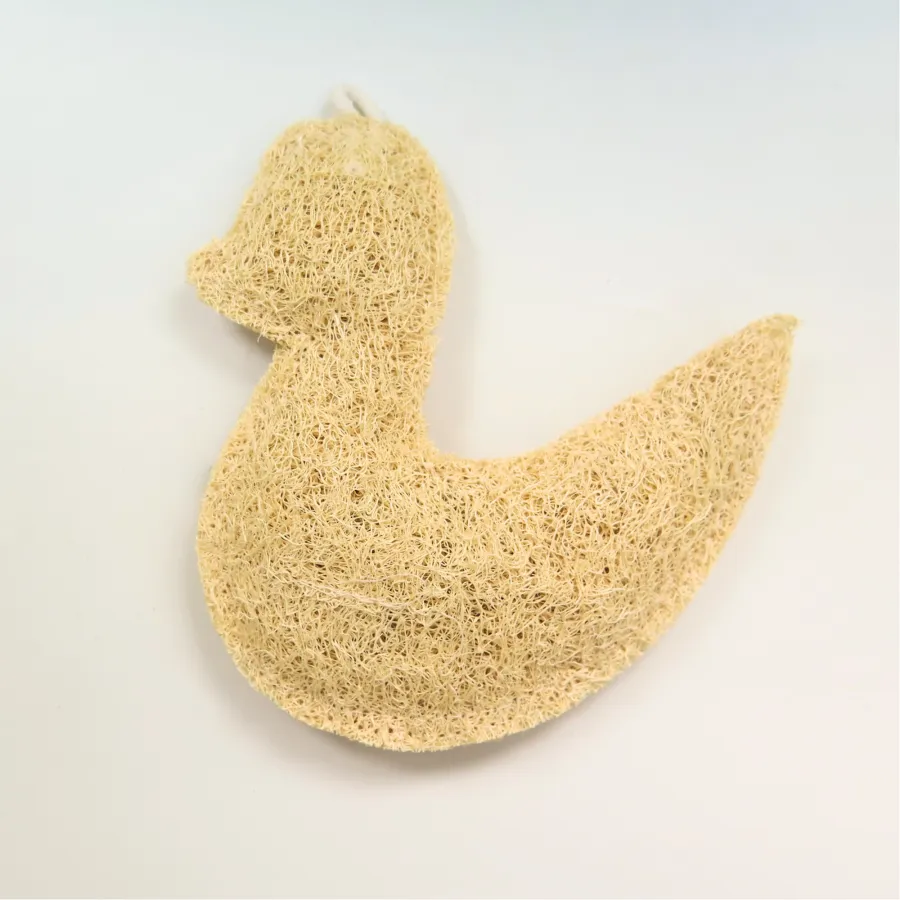
Our current loofah shapes are Teddy Bear, Fish, Cat, Kitty, Bone and Duck, 11.5 to 15 cm long depending on the shape. They are vacuum-sealed, 1, 2 or 3 pieces per bag, with a size sticker on each bag; your brand tag, standard 5 × 9 cm, goes inside the bag before sealing. A shape of your own needs a mould, which we discuss before quoting. More on the material in how loofah pet toys are made.
Before you add loofah to a small-pet range, put samples with the animals your customers keep and watch two things: whether the shape and size are easy for them to hold and gnaw, and how the toy breaks down with use. Then write the listing from what you saw.
Wording for a small-pet listing
Describe the material and leave the health claims out. A version you can adapt:
Natural loofah, the dried fibre of a mature gourd, cut into a shape for gnawing and play. Offer as enrichment alongside a diet based on hay. Check the toy regularly and remove it once it is damaged or worn small. If you have questions about your pet's teeth or diet, ask your vet.
The care lines follow the RSPCA's advice that toys should have "no small parts that your rabbit could swallow", and that owners should "repair, discard or replace any items that become damaged or dangerous." Avoid "dental", "cleans teeth", "safe" and "vet approved". More on wording in writing a natural chew listing without overpromising.
Questions about loofah for rabbits and small pets
Can rabbits chew loofah?
We have found no veterinary source that addresses loofah for rabbits. Sell it as enrichment, keep hay as the base of the diet, and refer health questions to a vet.
Does loofah wear down a rabbit's teeth?
We have no source for that. The Merck Veterinary Manual says plenty of hay helps wear rabbit teeth down; a toy is enrichment on top of hay.
Is loofah OK for guinea pigs?
Guinea pigs also have continuously growing teeth and need hay. We have no data on loofah for guinea pigs, so test samples and ask owners to remove any damaged toy.
Are your loofah toys tested?
No. We hold no lab test on loofah; our only test report covers coffee wood.
What is the minimum order for loofah shapes?
50 pieces per item, and loofah can ship in the same order as our other natural lines.
Test loofah with real small pets first
Start with samples: your first 3 are free, you pay the shipping.