How to store coffee wood chews in a warehouse or shop
Keep coffee wood chews in their sealed vacuum bags until they are sold, and keep the cartons dry and away from heat, because cracking can start from 40 °C. Check stock when it arrives, set aside any damaged bags, and do not open bags to repack unless the wood goes straight back behind a moisture barrier.
- For importers, warehouses and pet shops
- Coffee wood only
- About 5 minutes to read
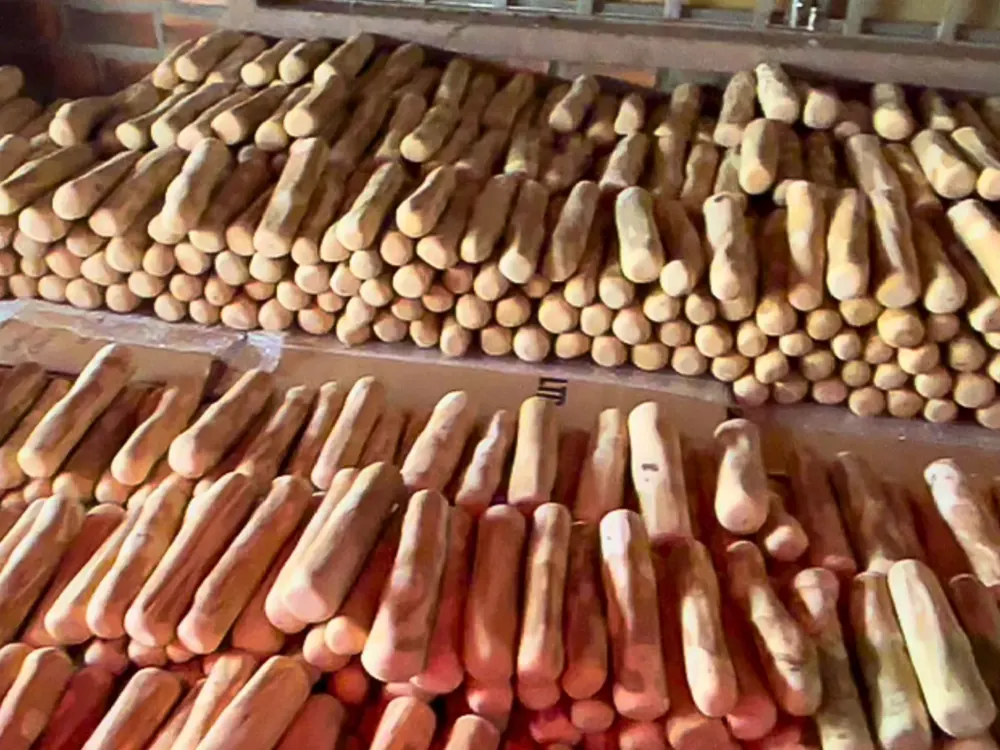
What changes coffee wood after it leaves the factory
Coffee wood is a natural material that keeps exchanging moisture with the air around it. We measure it below 14% at the core before packing, but that figure describes the wood on the day it was measured. From then on, two things change it: heat and moisture.
Heat can make it crack. Moisture going in and out makes it swell and shrink. The vacuum bag slows that exchange down but does not stop it. Storage is about keeping the bag doing its job for as long as the wood sits in stock.
When the shipment arrives
- Film the cartons being opened. The accepted crack level is written on the proforma invoice before you pay a deposit. If real defects go beyond that level, the video is what we need, and we make up the part beyond it in your next shipment.
- Check a sample of bags for cracks and lost vacuum. A bag that has gone soft is no longer protecting the wood. Set it aside and look at the wood inside.
- Separate damaged pieces at once. We do the same at our own warehouse: wood is checked for cracks as soon as it arrives, and cracked pieces are set aside.
- Move cartons in the cool part of the day if they have to cross an open yard in summer. We move wood in the cooler hours for the same reason.
Our responsibility for the wood runs to the moment it is vacuum-sealed. Bags opened and left in hot, humid conditions after delivery are outside it, which is one more reason to keep them closed.
In the warehouse: heat first
Cracking can start from 40 °C, depending on how much moisture the wood still holds. Practical rules:
- Keep coffee wood off the top racks under the roof in summer.
- Keep cartons away from heaters, dock doors that face the sun, and vehicles left standing.
- Leave the 5-ply export cartons closed until you need the stock.
- Rotate stock so older cartons go out first.
Why heat does this, and why drier wood is not the answer, is covered in why coffee wood chews crack.
Moisture and mould
Mould needs moisture. The US Environmental Protection Agency puts it simply: "There are many types of mold, and none of them will grow without water or moisture" (EPA, a brief guide to mold, moisture and your home). For homes, the EPA suggests keeping indoor humidity below 60%, ideally between 30 and 50%. That guidance is written for homes, not for wood stock, but it points in the right direction for a storeroom too.
On our side, we clean surface dust off the wood carefully, because dust, more than the wood itself, is the main cause of mould. Each bag carries a desiccant pack. On your side:
- Store cartons off the floor and away from walls that get damp.
- Do not leave opened bags of wood in a humid room.
- If a bag has lost its vacuum, check that wood before it goes on sale.
We cannot promise that natural wood will never show mould in every storage condition. What we can do is keep moisture low at the core, clean the surface, seal the bag, and tell you plainly how to keep it that way.
Repacking: plan it before production
One mistake to avoid is opening vacuum bags to repack for retail. Kraft bags and cartons are not a moisture barrier, and wood packed only in paper cracks about as much as unpacked wood. We do not yet have an eco-friendly alternative to the vacuum bag.
The way around it is to plan the retail pack before we produce. Your brand tag can go inside the vacuum bag before sealing, and sets of 1, 2 or 3 pieces can be sealed together, so the bag that leaves our factory is the bag that reaches the shelf. If you want a printed box, keep the vacuum bag inside it. Changing the packing spec after goods are packed means cutting cartons open and repacking, so it pays to agree it first. Packing options are on how we pack, and Amazon details in packing natural pet toys for FBA.
What to tell your customers
The same advice works on a shop shelf and at home. Keep the chew in its bag, away from heat, until the dog is going to use it. Once the bag is opened, the wood slowly balances with the room; that is normal for natural wood. Supervise the dog while it chews, remove any fragments, and take the chew away once it is worn small. Ideas for explaining natural differences between pieces are in explaining natural variation to customers.
Questions about storing coffee wood chews
How should coffee wood chews be stored?
In their sealed vacuum bags, in closed cartons, in a dry place away from heat, until they are sold.
What temperature is too hot for coffee wood?
Cracking can start from 40 °C, depending on how much moisture the wood still holds.
Can I open the vacuum bags to repack?
Only if the wood goes back behind a moisture barrier. Kraft bags and cartons alone are not one, so plan your retail packing before production instead.
Will coffee wood go mouldy in storage?
Mould needs moisture. Keeping bags sealed, cartons dry and opened wood out of humid rooms helps limit it; we cannot promise mould-free wood in every storage condition.
What should I do if bags arrive damaged?
Film the cartons being opened and set damaged bags aside. The accepted crack level is written on the proforma invoice before you pay a deposit. If real defects go beyond that level, we make up the part beyond it in your next shipment.
Plan your packing with us
Start with samples: your first 3 are free, you pay the shipping.