
How to compare two coffee wood chew suppliers with samples
Order the same sizes from both suppliers, then compare them on the same points: where moisture is measured, how each stick is packed, size codes and tolerance, what the proforma says about cracks, which tests and documents exist, and the terms. A price comparison only means something once those points match.
- For importers and Amazon sellers
- Choosing a coffee wood supplier
- About 6 minutes to read
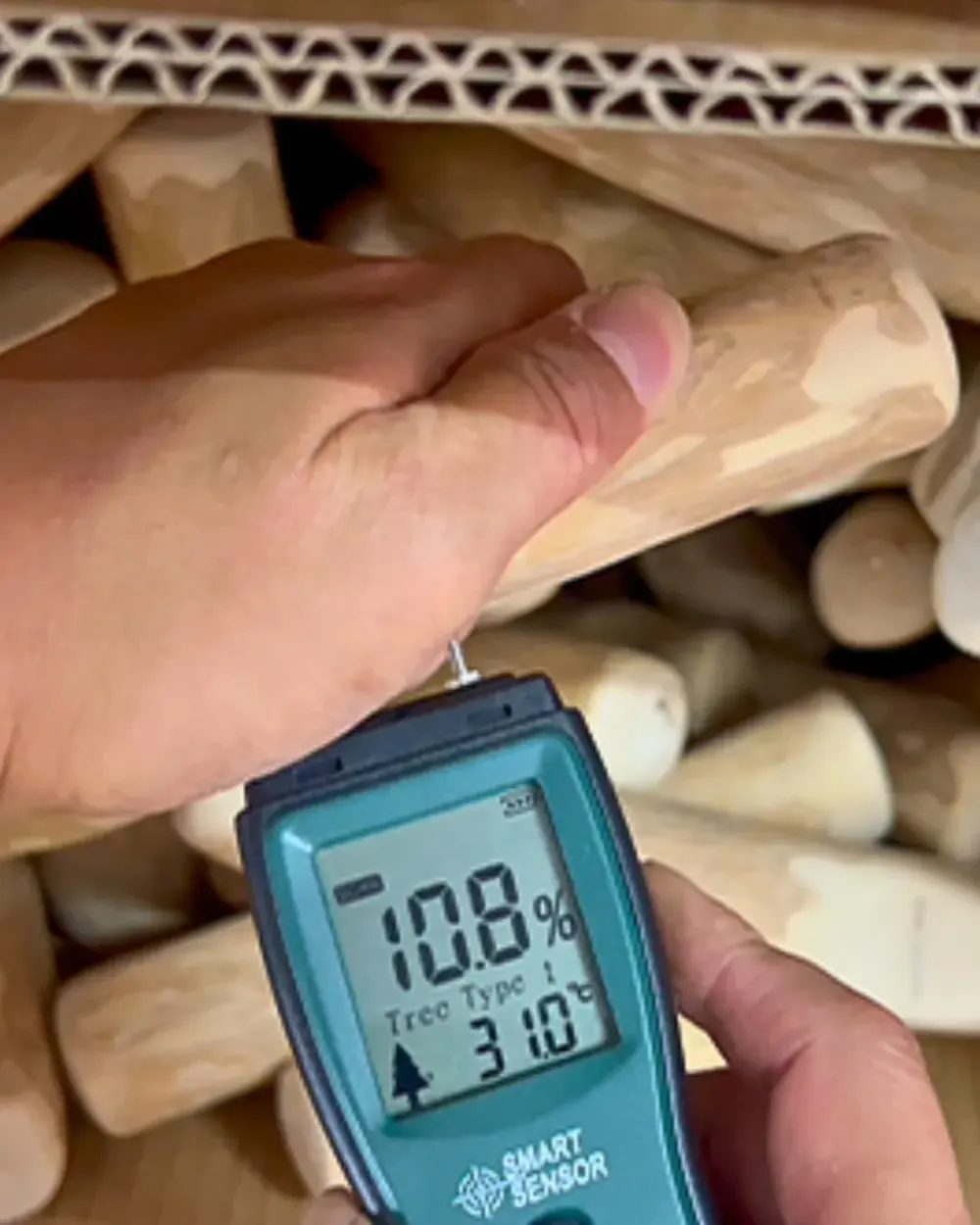
Set up a fair test
Two samples are only comparable if you asked for the same thing. Before you order, fix three points with both suppliers:
- The same sizes, named by length and diameter, not only by a letter. One supplier's M can be another's L.
- The same packing, ideally the pack the bulk order would ship in. A loose stick in an envelope tells you less than a sealed retail bag.
- The same questions, asked in writing, so the answers can sit next to each other.
Write down the date each box arrives and open both on the same day, in the same room.
A side-by-side scorecard
Fill in one column per supplier. Our own answers are in the last column, so you can see what a full answer looks like.
| Point | What to ask | Our answer |
|---|---|---|
| Moisture | What is the limit, and where on the stick is it measured? | Below 14%, measured at the core, before vacuum packing. One number for every size |
| Raw material | Where does the wood come from? | Mature Robusta coffee trees (20+ years) cleared at the end of their productive life, Central Highlands of Vietnam |
| Additives | Is anything added to the wood? | No chemicals are added in production |
| Packing | Is each bag vacuum-sealed, with a desiccant? | One size per bag, vacuum-sealed, desiccant pack inside |
| Sizes | Product codes, length, diameter, tolerance | Six sizes, CC01XS to CC01XXL. Tolerance written in centimetres |
| Cracks | What crack level is accepted, and where is it written? | The accepted crack level is written on the proforma invoice before you pay a deposit |
| Lab test | Which test exists, for which product? | SGS heavy-element test to ASTM F963-23, for coffee wood. Report on request |
| Documents | What comes with every shipment? | Commercial invoice, packing list, bill of lading or air waybill. Origin, phytosanitary and fumigation certificates when your market requires them |
| Minimum | Per size or per item? | 50 pieces per item, sizes split freely |
| Payment | Deposit, and what triggers the balance? | T/T 50/50, balance on the draft B/L for FOB and CIF |
Moisture: the number and the place it is taken
Two suppliers can quote the same figure and mean different things. A reading at the surface of a stick can look drier than the centre. Ask where the meter goes in. Ours is measured at the core, and the limit is below 14% for every size.
If one supplier promises 10–12%, ask what problem that number is meant to solve. When we ask buyers that question, the real concern turns out to be mould and insects. Natural coffee wood dried that far cracks more. Small sizes such as S and M can reach 10–12%, but large sizes cannot without cracking. We explain the reasoning in why we measure moisture at the core, and the crack side in why coffee wood chews crack.
The bag tells you as much as the stick
Look at the pack before you open it. A vacuum-sealed bag slows the exchange of moisture between the wood and the air. A kraft bag or a carton on its own does not. Once you open a vacuum bag, the wood slowly balances with the room. That is normal, and it is the same for every supplier, so open both samples at the same time.
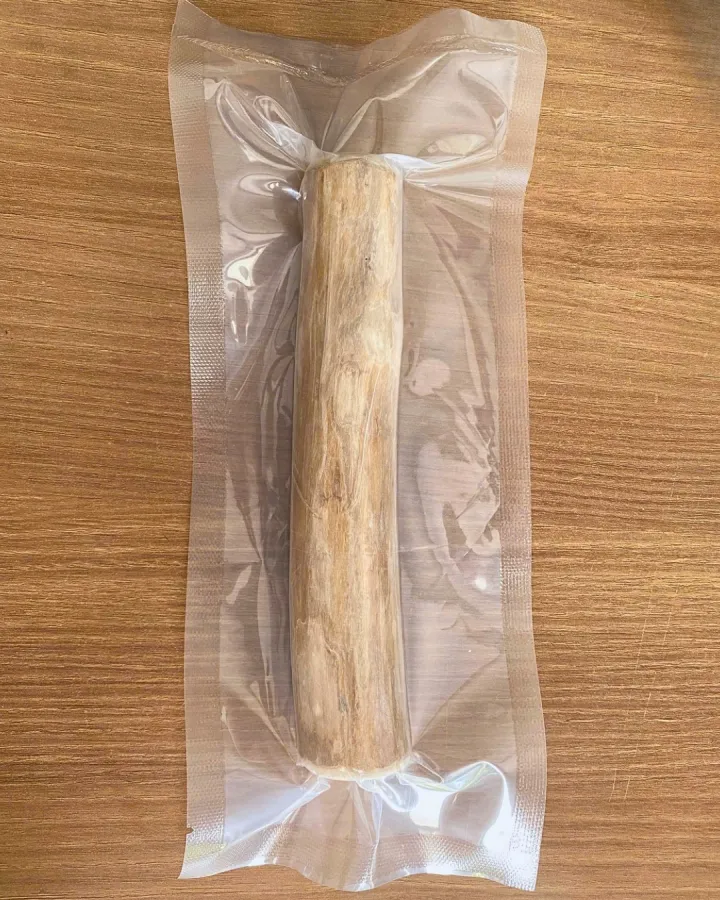
Then compare the sticks against the size range each supplier wrote down, not against each other. Every coffee wood stick has its own shape and grain, so two good samples will not look identical. What matters is whether each stick falls inside its stated length and diameter. Ours are listed in coffee wood chew sizes, XS to XXL, and the look of the wood in colour and grain variation.
Questions that show who makes the wood
A maker can explain its own limits. Ask both suppliers:
- What is the longest size you cut, and why not longer? We do not cut longer than XXL (22–23 cm), and we can explain the reason from the raw material.
- Can you show real shipping documents? A bill of lading with private details covered shows a real export record.
- What is written down before I pay? Sizes, tolerance, crack level, packing and payment trigger should all be on the proforma.
- Which sample will bulk be checked against? With us, the sample you approve becomes the reference for the bulk order.
The wider checklist, for any natural pet toy, is in how to vet a natural pet toy supplier. How we make coffee wood from tree to bag is on coffee wood dog chew manufacturer.
Questions buyers ask when comparing suppliers
Is a lower moisture figure always better for coffee wood?
No. Natural coffee wood dried too far cracks more. Ask where the reading is taken, and what the number is meant to prevent.
Why do two suppliers' sticks look so different?
Every coffee wood stick has its own shape and grain. Compare each stick with the size range the supplier wrote down, not with the other supplier's stick.
Should I compare price first?
Compare after the sizes, packing, crack level and terms match. Until then, the two prices describe different products.
Is your coffee wood treated with chemicals?
No chemicals are added in production. Depending on the destination, a shipment may need fumigation before export.
Can I get your samples to compare with my current supplier?
Yes. Your first 3 samples are free, you pay the shipping, which can be credited against your first qualifying production order.
Put our samples next to your current ones
Your first 3 are free, you pay the shipping.