Importing natural pet toys into Australia: BICON conditions by material
In the BICON cases read for this article, none of the four materials needs an import permit when the case conditions are met. The four materials fall across three BICON cases, and what happens at the Australian port differs by case. This is how the cases stood as of November 2026. Check BICON and confirm with your customs broker before you order.
- For Amazon sellers and private label brands in Australia
- Coffee wood, loofah, hemp, coir
- About 7 minutes to read
The four materials at a glance
BICON is the import conditions database of the Australian Department of Agriculture, Fisheries and Forestry. We opened it on 25 November 2026 and read the cases below. The Department decides which case a consignment falls under, so treat this table as a map of what BICON says, and check the live case for your own product.
| Material | BICON case (effective) | Papers the case asks for | On arrival |
|---|---|---|---|
| Coffee wood | Timber and timber products (30 Oct 2026) | Phytosanitary or methyl bromide fumigation certificate showing treatment; supplier declaration; storage declaration in some cases | Released once all requirements are met; onshore treatment or inspection if treatment was not done offshore |
| Loofah | Plant fibre products and seed handicrafts (27 Oct 2026) | Goods clearly identified, with the full botanical name or a clear description | Inspection; whole pieces go to mandatory treatment, ground or broken-up product can be released after inspection |
| Coir, hemp, rush, seagrass, water hyacinth | Permitted plant fibres (27 Oct 2026) | Botanical name, the article, and the process or level of processing | Depending on the branch: released on documents, full inspection at an approved arrangement site, or inspection and mandatory treatment |
Coffee wood: the "Timber and timber products" case
The case says an import permit is not required when its conditions are met. It covers pieces with at least one dimension of 200 mm or less. In its "Wooden products" table, the toys row excludes "animal/pet toys/games/aids". The path we read from there ran through the "Manufactured wooden articles" group for a commercial consignment.
The conditions we read on that path:
- Evidence of treatment on a phytosanitary certificate or a methyl bromide fumigation certificate. One option in the table is 48 g/m³ for 24 hours at 21°C or above. Other treatments are listed too, including sulfuryl fluoride, gamma irradiation, ethylene oxide and permanent preservative treatment.
- Treatment within 6 calendar months of the export date. Certificates are not accepted from providers listed as suspended, under review or withdrawn on the Department's List of Treatment Providers.
- A supplier's or exporter's declaration that names the specific product. "Treated goods" or similar general wording is not accepted.
- A storage declaration. FCL consignments treated in the container, with the container numbers on the treatment certificates, do not need one, and the case lists other exemptions.
- Clean, new packaging, and goods free of seed, soil and plant or animal debris.
If treatment is not done offshore, BICON says the importer is given onshore treatment or inspection options. The Department releases the goods once every requirement is met.
A separate case for pet food, pet food ingredients and supplements for companion animals also exists. For how coffee wood dog chews are classified at customs, see this guide on coffeewoodchew.com.
Loofah: "Plant fibre products and seed handicrafts"
In this case, "fibre products" means dried empty cotton pods, cholla wood and luffa. No import permit is needed when the conditions are met. The goods must be clearly identified, by full botanical name or a description that clearly identifies them, on a declaration, phytosanitary certificate, invoice, label, bill of lading or packing list. They must be thoroughly dry and not capable of sprouting, in clean new packaging, and free of seed, soil and debris.
What happens in Australia depends on the form of the goods. Powdered, ground or sufficiently broken product may be released after inspection. Whole product, or pieces not broken up enough for a thorough inspection, are subject to mandatory treatment on arrival, with one of three options:
- methyl bromide at 32 g/m³ for 24 hours at 21°C
- heat treatment at 85°C for 8 hours
- cold storage at -18°C for 7 days
Coir, hemp, rush, seagrass and water hyacinth: "Permitted plant fibres"
This case covers the majority of articles made of the fibres on its list, including coir, hemp, rush, seagrass and water hyacinth. For a product made of several materials, BICON says to search each component separately. Flexible plant fibre fabrics (made by weaving, knitting, spreading, crocheting or bonding) are covered by a separate case, "Plant based fabric, textiles or yarn".
The case then splits in two, depending on whether the fibre went through an approved commercial manufacturing process.
Branch one: an approved process
The annex lists eight processes: bleaching, dyeing, extraction, fermentation, heat treatment, pasteurisation, pureeing and sterilisation. The annex also sets limits. Sun or air drying does not count. Under pureeing, pressing, moulding or shaping alone is not considered adequate. Methyl bromide or sulfuryl fluoride fumigation is not accepted as sterilisation.
If the fibre went through a listed process, no import permit is needed. The documents must give the botanical name, what the article is and the type of process used, and the material must be thoroughly dry. If the documents demonstrate this, the goods may be released. If they do not, the consignment is directed for inspection. On this branch, BICON adds that products that also include wood, willow, cane, straw, banana fibre or bamboo must also comply with the conditions for those commodities.
Branch two: no approved process
If the fibre was not processed by an approved process and not treated offshore under an approved scheme, the documents must give the identity of the plant material, its botanical name, what the article is and the level of processing. On arrival, each consignment is either fully unpacked and inspected at an approved arrangement site, or verified and given mandatory treatment: ethylene oxide fumigation or gamma irradiation at 25 kGy. For goods treated offshore under an approved scheme, read that branch in BICON.
On either branch, ask your supplier which process the fibre went through and have it written on the documents.
For pet beds, check the BICON case for each material.
Illegal logging due diligence for wooden goods
The timber case notes that goods under it may be subject to Australian illegal logging prohibition laws. BICON states that before you import a timber product, you must assess and manage the risk of it containing illegally logged timber, a process it calls "due diligence". Ask your customs broker or adviser what that means for your consignment.
Our export document set
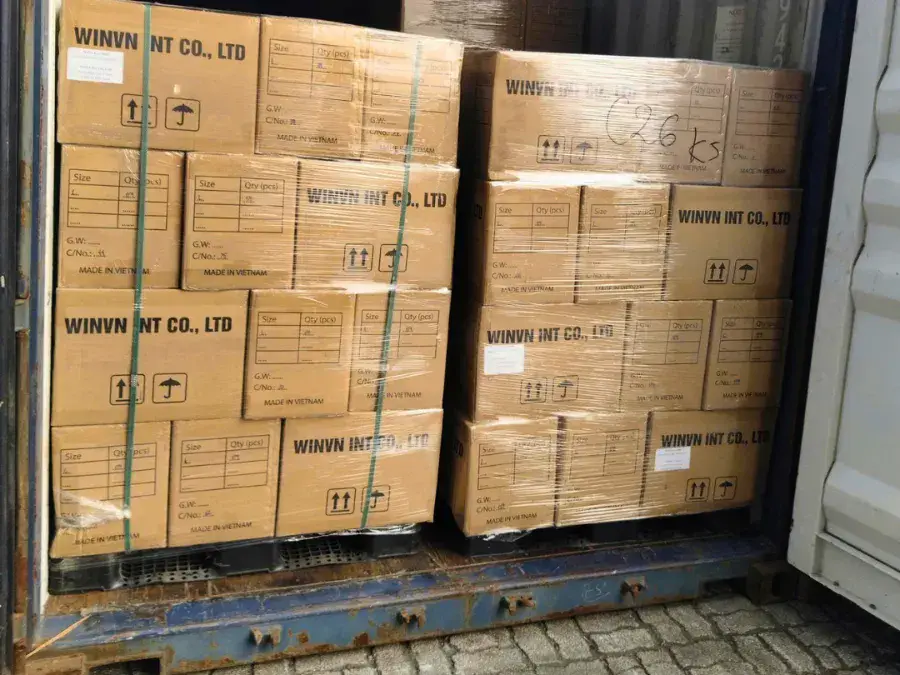
Every WINVN INT export shipment includes a commercial invoice, packing list and bill of lading or air waybill. Phytosanitary and fumigation certificates, and a certificate of origin where the product qualifies, are arranged when your market requires them and billed separately. A phyto in Vietnam is issued by the Plant Production and Protection Department, and fumigation is done before export customs clearance.
Whether these papers meet a BICON case is for the Department to decide; check with your customs broker. More in our documents page, fumigation certificates for natural pet toys and phytosanitary certificates for wooden dog chews. For the wider picture on this market, see our Australia page.
Questions buyers ask about importing into Australia
Do any of these materials need an import permit?
In the BICON cases read for this article, no permit is needed for any of them when the case conditions are met. Check the live case on BICON, because conditions can change.
Where do I check the current conditions?
On BICON, the Department's import conditions database. Each case shows its effective date, and your customs broker can confirm which case applies.
Who decides which BICON case a pet toy falls under?
The Department does. BICON has, for example, a separate case for pet food, pet food ingredients and supplements for companion animals, so read the live case with your customs broker.
What if a product is made of several materials?
BICON says to search for each component separately. A toy of wood and fibre, for instance, means two searches.
Start with samples and your broker's list
Tell us your market and shipping term when you ask for a quote, and we tell you which documents we can arrange. Samples come first: your first 3 are free, you pay the shipping.