
Japan plant quarantine for natural pet toys: what the MAFF lists say
Japan's Plant Protection Station lists wood and bamboo products, loofah products, and string and rope fibre products among items that are not subject to import plant quarantine. It lists wood that has not been compressed, shredded, crushed or ground, and coco peat, among items that need a phytosanitary certificate. Neither list names a cut and dried wooden dog chew, coir rope toys or hemp rope toys by name, and the pages do not define "processed". Ask your local plant protection station (植物防疫所) before the first shipment. When the importing country requires one, we supply a phytosanitary certificate.
- For importers and wholesalers in Japan
- Checked against MAFF pages, November 2026
- About 6 minutes to read
What we read, and what this page is not
We read two pages from the Plant Protection Station of Japan's Ministry of Agriculture, Forestry and Fisheries (MAFF) and one MAFF question-and-answer document on pet food, all as of November 2026. We quote the Japanese item names exactly, with an English gloss in brackets. The gloss is ours, not an official translation. This page reports what the lists say. It does not decide if your product is exempt. That decision belongs to the plant protection station that inspects your goods.
Items MAFF lists as outside import plant quarantine
The page 輸入植物検疫の対象とならない植物について (plants not subject to import plant quarantine) includes these entries relevant to natural pet toys:
- Wood and bamboo: "製材、防腐木材、木工品、竹工品及び家具什器等の加工品" (sawn timber, preservative-treated wood, woodwork, bamboo work, and processed goods such as furniture and fixtures).
- Loofah, string and rope: "麻袋、綿、綿布、へちま製品、紙、ひも、綱等の繊維製品及び粗繊維(原綿を含む。)であって植物の包装材料として使用されたことのないもの。" (fibre products and coarse fibres such as jute bags, cotton, cotton cloth, loofah products, paper, string and rope, including raw cotton, that have not been used as packing material for plants).
- Coconut: "ココやしの内果皮を粒状にしたもの" (granulated coconut endocarp, that is, the inner shell). This is the only coconut entry. The page does not mention coir fibre by name.
Note the condition on the fibre entry: the goods must not have been used as packing material for plants. The page also speaks of "高度に加工されたもの" (highly processed items), giving furniture and tea products as examples, without defining the term.
Items MAFF lists as needing a phytosanitary certificate
The second page, 検査証明書の添付が免除される植物の見直しについて (review of plants exempt from the certificate), was updated on 1 April 2023 (令和5年4月1日更新). It says: "以下の植物を輸入する場合は、輸出国政府機関が発行する検査証明書(Phytosanitary Certificate)を添付して、輸入検査を受ける必要があります。" (when importing the plants below, attach a phytosanitary certificate issued by the exporting country's government and undergo import inspection).
- Wood: "木材(木材こん包材を除き、圧縮、細断、破砕及び粉砕されていないもの)" (wood, excluding wood packaging material, that has not been compressed, shredded, crushed or ground).
- Growing and farm materials (農林業用生産資材): "ピートモス、ミズゴケ、ヘゴ、ココピート、ほだ木、樹皮、竹材、その他培養資材、土壌被覆資材" (peat moss, sphagnum, tree fern, coco peat, mushroom logs, bark, bamboo material, other growing media and mulch).
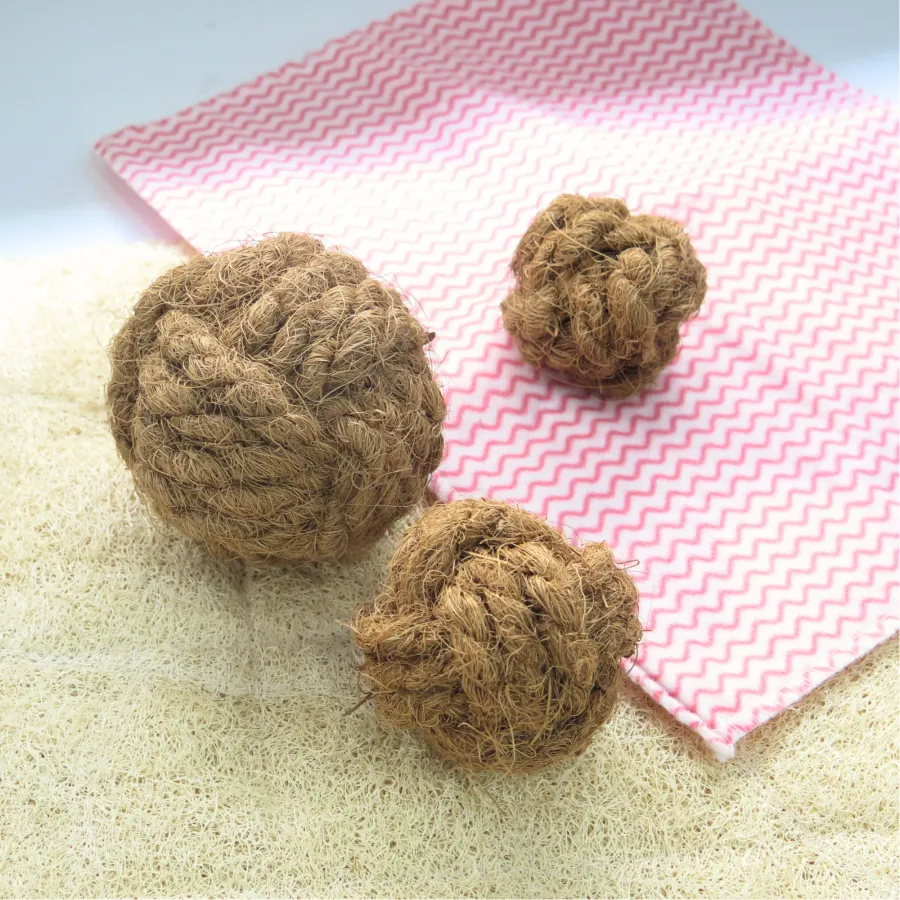
The page states that the change took effect on 5 August 2020, with strict enforcement of certificates on cargo from 5 August 2023. Coco peat is on the "certificate needed" side. Our coco coir toys are machine-twisted coir rope, hand-knotted into balls and bones, with no glue. Whether an inspector treats them as rope fibre products or as coconut material is not answered on either page.
The gap: what the pages do not define
Neither page defines what counts as "加工" (processed). That leaves open questions for natural pet toys:
- Coffee wood chews. We remove the bark and use the core of the stick, then cut and dry it. No chemicals are added in production. One list names "木工品" (woodwork) as outside quarantine, the other names "木材" (wood) that has not been compressed, shredded, crushed or ground as needing a certificate. A debarked, cut stick is not named on either list.
- Loofah toys. They are cut from dried loofah gourds into shapes. "へちま製品" (loofah products) is on the not-subject list, with the packing-material condition. The page does not say how a cut, shaped toy is treated.
- Hemp and coir rope toys. "ひも、綱等の繊維製品" (fibre products such as string and rope) is on the not-subject list. Hemp and coir are not named.
MAFF itself says the items shown are typical examples: "ここで示した植物は代表的なものです。ご不明な点などございましたら、最寄りの植物防疫所にお問い合わせください。" (these are representative; if anything is unclear, contact your nearest plant protection station).
What to ask the plant protection station before you ship
Ask in writing, per product line, and keep the reply with your import file. Useful points to send:
- The material and what was done to it: debarked, cut and dried coffee wood; dried loofah cut into shapes; twisted and knotted hemp or coir rope.
- A photo of the finished product and its retail bag.
- The country of origin, Vietnam, and the planned port of entry.
- The question itself: is a phytosanitary certificate needed, and is import inspection needed?
If the answer is "certificate needed", tell us before we book. If the station also asks for a treatment, ask them to state which one.
Is a wooden chew pet food under Japanese law?
MAFF's Q&A on the Pet Food Safety Act (updated 27 April 2026) answers this for toys: "一方、愛玩動物が口にする可能性のあるものであっても、おもちゃ、愛玩動物用飼料の容器等は、栄養に供するものではないことから、対象となりません。" (things a pet may put in its mouth, such as toys and pet food containers, are not covered, because they are not for nutrition). The same answer lists "ガム" (chews) among covered items when they are used for nutrition. Whether your product counts as a toy or as a chew used for nutrition is for MAFF or your adviser to confirm.
What we supply for a shipment to Japan
- Every shipment: commercial invoice and packing list, plus the B/L (or AWB), which the shipping line or forwarder issues.
- Phytosanitary certificate, when the importing country requires it. In Vietnam it is issued by the Plant Production and Protection Department. See phytosanitary certificates for wooden dog chews.
- Fumigation, when required. Fumigation is done before export customs clearance. Details in fumigation certificates for pet toys.
- Drafts first. We send draft documents for you to check before the originals, on every shipment. Why that matters: check draft documents before shipping.
Questions Japanese importers ask
Do loofah pet toys need a phytosanitary certificate in Japan?
MAFF lists "へちま製品" (loofah products) among items not subject to import plant quarantine, if not used as plant packing material. Confirm with the plant protection station for your product before shipping.
Does coffee wood count as processed wood?
The MAFF pages do not define "processed". A debarked, cut and dried stick is not named on either list, so ask the plant protection station in writing.
Is coco coir the same as coco peat?
MAFF lists coco peat (ココピート) as needing a certificate and does not name coir rope. Our coir toys are twisted rope knotted by hand, so describe them exactly when you ask the station.
Are wooden chews covered by Japan's Pet Food Safety Act?
MAFF's Q&A says toys are not covered because they are not for nutrition, while chews used for nutrition are. Confirm your product description with MAFF or your adviser.
Can you send a phytosanitary certificate?
Yes, when the importing country requires one. We send the draft for your approval before the original.
Show the station a real sample
A sample makes the question concrete: your first 3 are free, you pay the shipping.
Documents that come with every shipment: documents and testing.