
Mould during sea freight: why natural pet toys can arrive damp, and how to lower the risk
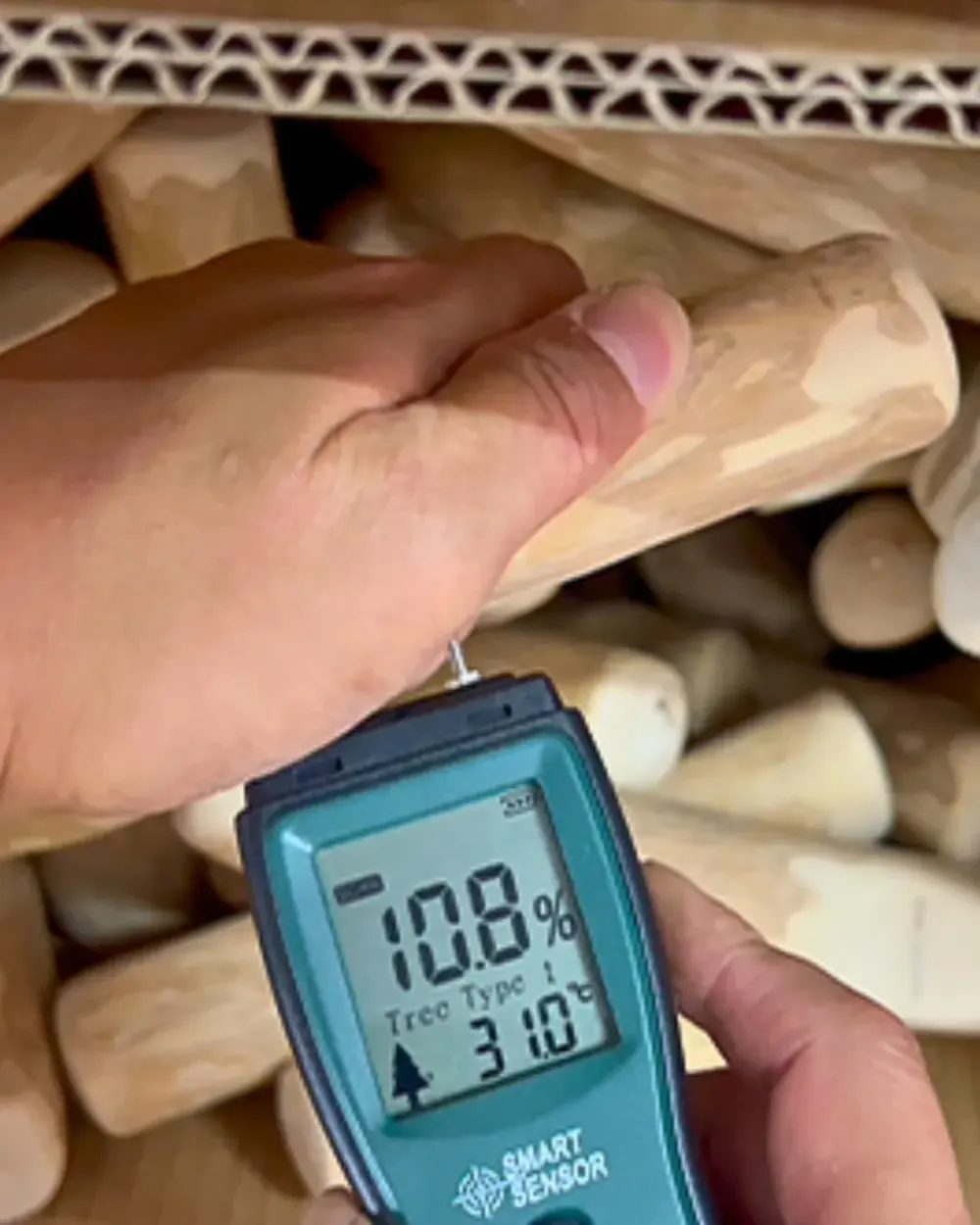
Natural pet toys that leave dry can take on moisture during weeks in a closed container, and damp, warm, still air helps mould grow. The protection is in the packing: we measure coffee wood below 14% moisture at the core, then vacuum-seal it with a desiccant pack. Paper bags and cartons do not block moisture. On arrival, open a sample of cartons the same day, check the bags, and store the goods dry and off the floor.
- For importers and Amazon sellers
- Coffee wood, loofah, hemp, coco coir
- About 6 minutes to read
Why goods that left dry can arrive with mould
Mould on wood needs moisture in the wood itself. A German information sheet from DGUV on mould on transport and packaging wood states it plainly: "Schimmelpilze benötigen für ihre Entwicklung eine Holzfeuchtigkeit von mindestens 20 % (Optimum > 30 %)", that is, moulds need a wood moisture of at least 20% to develop, with an optimum above 30% (DGUV FBHM-083).
The same guide names the conditions that help it along: very high air humidity, above 70% relative humidity, together with warmth and still, standing air "kann … zu einem starken Schimmelpilzwachstum führen (z. B. in geschlossenen Lagern, LKWs, Containern)", which can lead to strong mould growth, for example in closed stores, trucks and containers.
That guide is written for pallets and packaging timber, not for pet chews, but a closed container is one of the spaces it names.
What we do before the goods leave
When a buyer asks us for a moisture figure, the real worry is mould and insects. Our answer for coffee wood has three parts.
- Measured at the core. We measure coffee wood moisture below 14% at the core before vacuum packing. One figure for every size. Why the core and why that number is in coffee wood moisture, measured at the core.
- Clean surface. We clean surface dust off the wood carefully. On our wood, the main cause of mould is surface dust.
- Sealed against moisture. One size per bag, 1, 2 or 3 pieces, vacuum-sealed with a desiccant pack inside. Wood that was checked dry but not vacuum-sealed takes moisture back on a sea voyage in the rainy season.
Vacuum sealing slows the exchange of moisture between the wood and the air. It does not stop it completely, and it cannot help once a bag is opened or punctured. Kraft bags and cartons are not a moisture barrier. We do not yet have an eco-friendly alternative to the vacuum bag.
Before cartons are sealed, we photograph what is inside. Ask for those photos, and for loading photos, as part of your container loading check.
Which product lines are vacuum-packed
Not every line travels the same way. Know which of your goods have a moisture barrier and which do not:
| Product line | How it is packed |
|---|---|
| Coffee wood chews | Vacuum-sealed, one size per bag, desiccant pack inside |
| Loofah toys (shaped) | Vacuum-sealed, 1, 2 or 3 pieces per bag |
| Hemp balls | Not vacuum-sealed: poly bag, 5-ply export carton |
| Coco coir toys | Not vacuum-sealed: poly bag, 5-ply export carton |
| Pet beds | Packing confirmed model by model |
For lines without a vacuum seal, the inspection on arrival matters more. For woven beds, see why water hyacinth pet beds go mouldy.
What to do when the container arrives
After arrival, the first day counts. These checks are yours to run:
- Unload and open quickly. Do not leave the container or the cartons closed in a hot yard longer than needed. Coffee wood can crack from 40 °C, depending on its moisture.
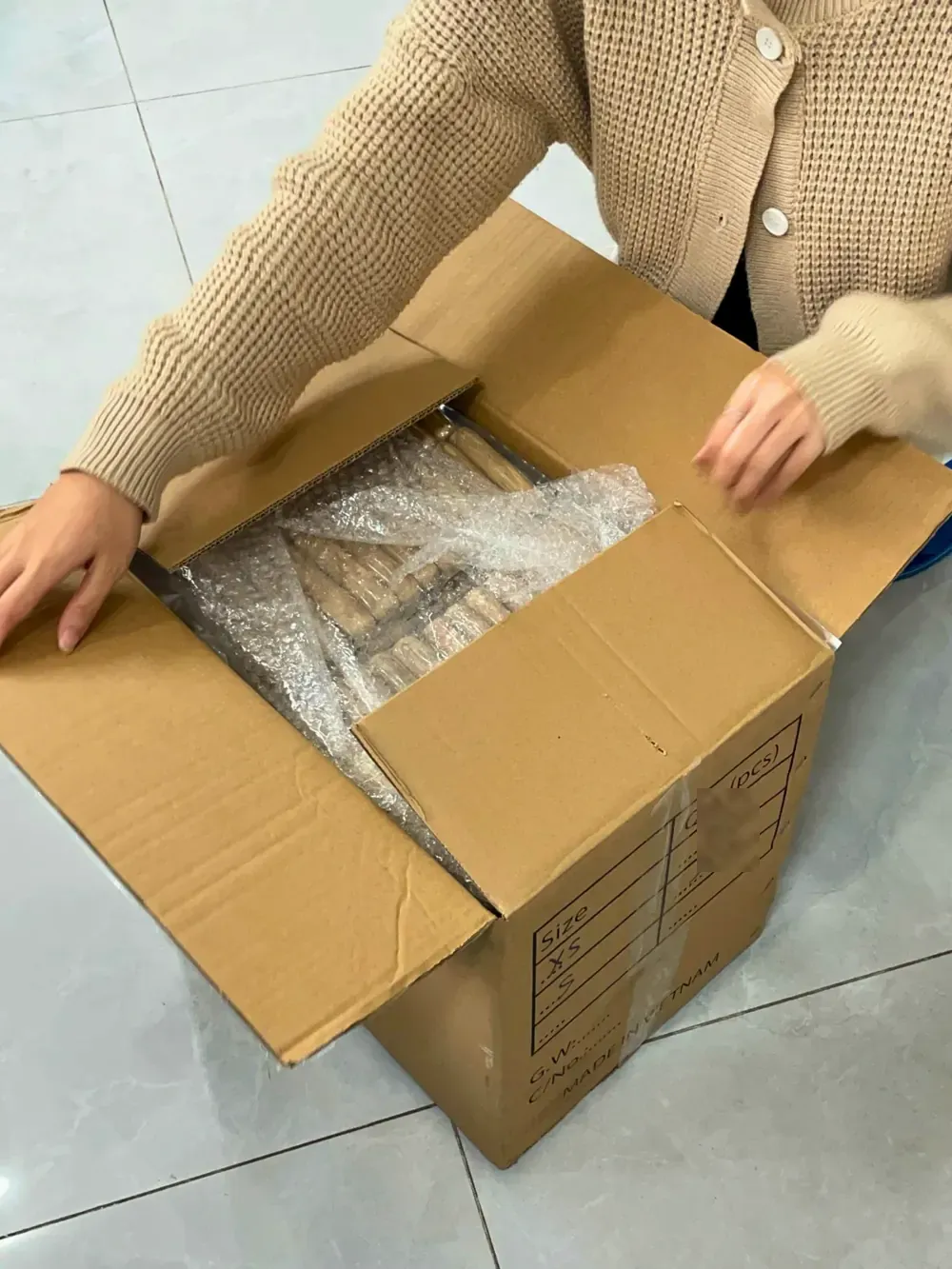
- Film the opening. A video of the cartons being opened is the clearest record if you need to raise anything with us.
- Check a sample of cartons. Look for damp patches on the carton, a musty smell or spots on the goods.
- Check the vacuum. A coffee wood or loofah bag that has gone soft is no longer protecting what is inside. Set it aside and look at the goods.
- Store dry. Cartons off the floor, away from damp walls and heat, and keep the 5-ply cartons closed until you need the stock.
- Keep bags sealed until sale. Once a bag is opened, natural wood slowly balances with the air in the room. That is normal, not a defect.
Longer-term storage for wood is covered in how to store coffee wood chews.
What we control, and what to send us
We keep moisture low at the core, clean the surface, seal the bag, and tell you which goods are sealed and which are not. If your customs or your customer has a written moisture rule, send it to us before the order so we can see whether it fits a natural product.
Questions buyers ask about mould in transit
Why did my natural pet toys arrive mouldy when they left dry?
Goods without a moisture barrier can take on moisture in a closed container. A DGUV guide on transport wood notes that high humidity, warmth and still air can lead to strong mould growth in containers.
What moisture level do you pack coffee wood at?
Below 14%, measured at the core, before vacuum packing. Each bag also holds a desiccant pack.
Are all your products vacuum-packed?
No. Coffee wood and shaped loofah toys are vacuum-sealed. Hemp balls and coco coir toys go in poly bags in 5-ply cartons, and bed packing is confirmed per model.
Will kraft paper packaging protect against moisture?
No. Kraft bags and cartons are not a moisture barrier, and we do not yet have an eco-friendly alternative to the vacuum bag.
What should I do when the shipment arrives?
Open and film a sample of cartons the same day, check that vacuum bags are still tight, and store the cartons dry, off the floor and away from heat.
See how the bags arrive
Order samples packed the way your goods will travel, and check the seal and the desiccant yourself.
Ask for samples Coffee wood chews
Your first 3 samples are free, you pay the shipping.