
Proving Vietnam origin for natural pet toys: what a US importer can ask for
Under 19 CFR 134.1(b), the country of origin is the country of manufacture, production or growth of the article, and work done in another country changes that only if it is a substantial transformation. For natural pet toys, a buyer can ask the maker for more than a certificate of origin: where the raw material is grown, where the goods are made, and draft documents that show it. Which records your customs broker wants on file is their call, so share this list with them.
- For US importers and Amazon sellers
- Origin and records
- About 6 minutes to read
What US rules mean by "country of origin"
The definition used for US origin marking is in Title 19 of the Code of Federal Regulations. Section 134.1(b) reads: "'Country of origin' means the country of manufacture, production, or growth of any article of foreign origin entering the United States. Further work or material added to an article in another country must effect a substantial transformation in order to render such other country the 'country of origin' within the meaning of this part" (eCFR, 19 CFR 134.1, as read in November 2026). The rest of that paragraph deals with goods of NAFTA or USMCA countries.
Whether a given product meets this test, and what your broker will accept as support, is not ours to decide. We are an exporter, not a customs broker or a lawyer. Confirm with your customs broker.
Why importers ask for more than a certificate
A certificate of origin is one document for one shipment. A buyer can also ask a second question: can the supplier show where the material is grown and where the work is done? That is a question about the supply chain, and the answer sits in ordinary production records.
If you are moving a product from another country, start with sourcing natural pet toys from Vietnam instead of China, which begins with true origin.
What we can show for coffee wood
For coffee wood we can describe the raw material in detail.
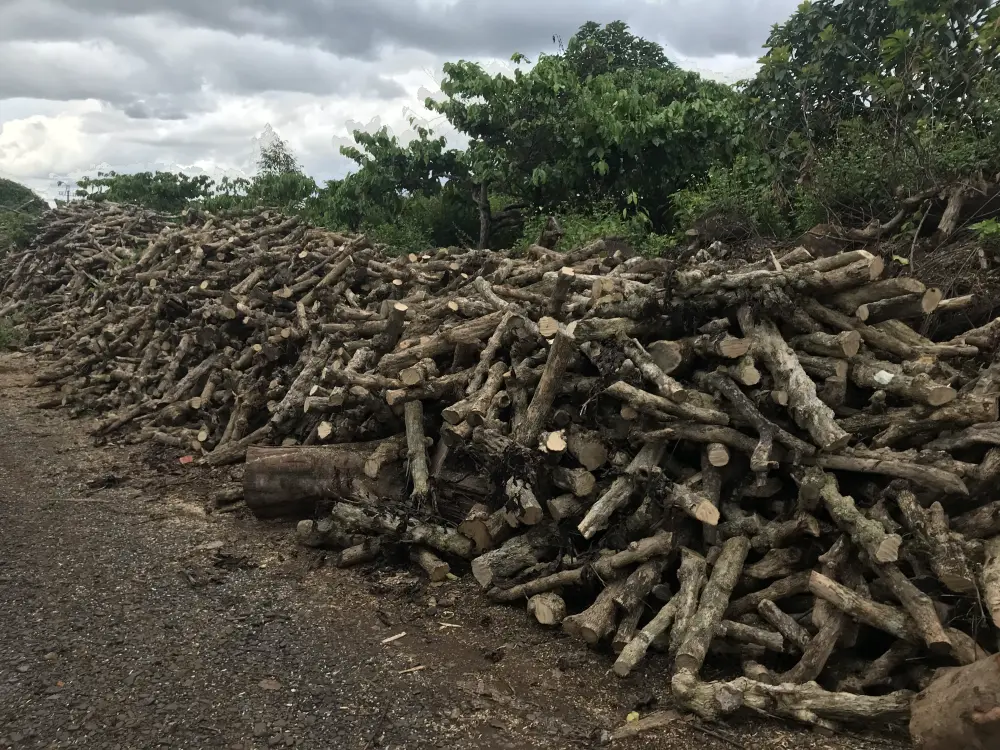
- Where it grows. Coffee wood sourced from mature Robusta trees (20+ years) at the end of their productive life, cleared to make way for new planting, in the Central Highlands of Vietnam.
- What kind of wood it is. Coffee is a perennial farm crop, not forest timber. The trees are cleared for replanting, not pruned branches.
- Who confirms the harvest. Harvesting is confirmed by the local authority, and that confirmation is the basis for the certificate of origin. We do not hand out the local paperwork itself. If your customs or customer needs proof of origin, a certificate of origin can be issued for the shipment where the product qualifies.
- Where it is made. Our two factories are in Dak Lak and Gia Lai provinces, in Vietnam's Central Highlands.
The full story of the wood, and how we choose it, is in where coffee wood dog chews come from.
Records available for every line
For every product, the paper trail of a shipment is the same, and you can check it before the goods sail.
| Record | What it shows |
|---|---|
| Commercial invoice and packing list | Seller, goods and quantities, every shipment. A coffee wood chew is described as a wooden pet toy. |
| Bill of lading | Shipper and port of loading, issued by the carrier or forwarder |
| Certificate of origin | Where the product qualifies. Each C/O has its own number. |
| Draft documents | Draft B/L, and phyto, fumigation and C/O when your market requires them, sent for your approval before the originals, on every shipment |
| Carton marks | For FBA, a Made in Vietnam label beside the FBA label; for other orders, a shipping mark with Ho Chi Minh City, Vietnam |
| Quality checks | A five-step QC from raw material to pre-shipment, with a QC file per product |
A certificate of origin is not available for every product line. We tell you before you order which lines in your mix can have one. Masked examples of real bills of lading are on our documents page.
Questions to put to any supplier
- Where is the raw material grown, and who confirms the harvest?
- In which province are the goods made? Can you name the province, even if not the address?
- Which lines in my order can have a certificate of origin, and which cannot?
- Will you send draft documents for my broker to check before the originals?
- Does the shipper on the B/L match the seller on the invoice?
Bring the answers to your broker together with a sample photo and the product description. How "Made in Vietnam" should appear on the retail pack is a separate question, covered in "Made in Vietnam" origin marking.
Questions buyers ask about proving origin
How do US rules define country of origin?
19 CFR 134.1(b) defines it as the country of manufacture, production or growth of the article; work in another country changes it only through a substantial transformation. Your customs broker applies it to your product.
Is a certificate of origin enough to prove Vietnam origin?
That depends on what your customs broker wants on file. We can also show where coffee wood is grown, the province of manufacture and draft documents for each shipment.
Can every product get a certificate of origin?
No. Not every product line qualifies, and we tell you before you order which lines in your mix can have one.
Where does your coffee wood come from?
From mature Robusta trees, 20 years or older, cleared for replanting in Vietnam's Central Highlands. Coffee is a perennial farm crop, and harvesting is confirmed by the local authority.
Where are your factories?
In Dak Lak and Gia Lai provinces, Vietnam. We do not publish the street address.
Check the records before you order
Tell us your products and destination, and we will tell you which lines can have a certificate of origin and send draft documents before shipment.
Ask for a quote Coffee wood chews
Want to see the product first? Your first 3 samples are free, you pay the shipping.