Where coffee wood dog chews come from
Coffee wood chews come from old Robusta coffee trees, 20 years or more, that farmers clear when the trees reach the end of their productive life and the plot is replanted. The wood is a byproduct of that renewal cycle in the Central Highlands of Vietnam. We collect it garden by garden, keep only the sound core of each log, and cut it into chews at our two factories in Dak Lak and Gia Lai.
- For pet shops, importers and Amazon sellers
- Coffee wood sourcing
- About 6 minutes to read
The tree: old Robusta at the end of its life
Robusta coffee is a farm crop. When a tree gets old the farmer cuts it down and plants again. Our wood comes from those cleared trees, aged 20 years or more. It does not come from pruned branches, and it does not come from forest.
If you want one sentence for a product page or a shelf card, this is the one we use ourselves:
Coffee wood sourced from mature Robusta trees (20+ years) at the end of their productive life, cleared to make way for new planting — a byproduct of the natural farm renewal cycle in the Central Highlands of Vietnam.
Every part of it can be explained if a customer asks.
An agricultural crop, not forest timber
Coffee is a long-lived agricultural crop. The trees stand on farms, and clearing them is part of normal farm work. Harvesting is confirmed by the local authority, and that confirmation is the basis on which a certificate of origin is issued for the wood.
We do not hand out the local paperwork itself. If your customs or your customer needs proof of origin, a certificate of origin can be issued for the shipment.
European buyers may ask about the EU deforestation regulation. Our position is narrow and exact: it does not yet apply to this product line, and we can show where the wood was grown. We do not go further than that.
The region
Our wood comes from plantations across Dak Lak and Gia Lai, roughly 500 to 800 m above sea level, on red basalt soil. Our two factories sit in the same two provinces, close to the raw material. Our office is in Ho Chi Minh City.
Wood is collected by hand, one garden at a time, as farmers clear their old trees. There is no large-scale felling.
From log to chew
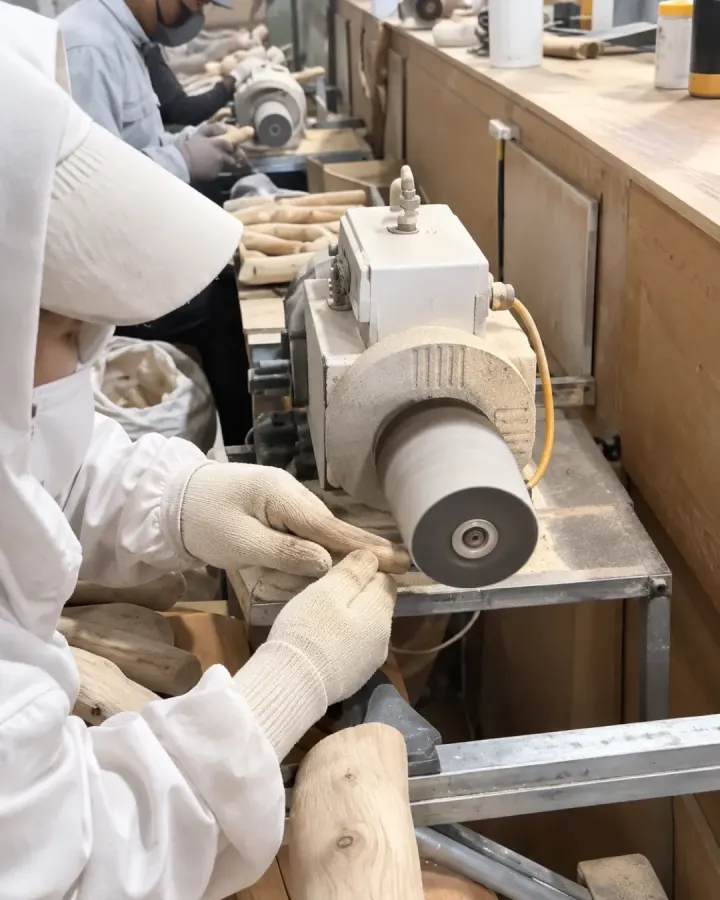
Not every log becomes a chew. Selection starts before the first cut:
- Bark off, core kept. We remove the bark and work from the middle of the log.
- Both ends cut away. About 5–7 cm at each end, where old wood may be cracked or decayed.
- Defects rejected. Sections with insect damage, hollow centres, bends or deep cracks are set aside.
- Cut and dried, then measured: moisture below 14%, taken at the core of the wood.
- Surface dust cleaned off. Dust, more than the wood itself, is what mould grows on.
- Checked five times: raw material, in-process, semi-finished, final product and pre-shipment.
Natural wood gives every chew its own shape and grain. That is worth telling customers before they open the bag. Ideas for that conversation are in explaining natural variation to customers, and the moisture limit is explained in why we measure moisture at the core.
Telling the story in your shop or listing
A sourcing story sells when it is specific and stops at what can be shown. Some guidance:
- Use the details. Robusta, 20+ years, cleared for replanting, Central Highlands of Vietnam. Specifics are more believable than "eco-friendly".
- Leave out certifications that do not exist. We hold no FSC, BSCI or ISO certification. If your listing implies one, it is making a claim we cannot back.
- Keep it a toy. On our export documents a coffee wood chew is described as a wooden pet toy, because it is a toy, not food. Avoid words that suggest it is something to eat.
- Pair the story with care advice. Supervise the dog, remove fragments, and replace the chew once it is worn small.
More on in-store displays in selling natural chews in a pet store. A common question that follows the sourcing story, whether the wood contains caffeine, is covered in coffee wood, caffeine and the ASPCA "coffee tree".
Paperwork that follows the wood
Coffee wood is of plant origin. Every shipment travels with a commercial invoice, packing list and bill of lading. A certificate of origin, phytosanitary certificate or fumigation certificate is added when the importing country requires it; see phytosanitary certificates for wooden dog chews. Which documents your country requires, your customs broker confirms.
Questions about where coffee wood comes from
Where does coffee wood for dog chews come from?
From Robusta coffee trees aged 20 years or more, cleared at the end of their productive life so the farm can be replanted, in the Central Highlands of Vietnam.
Are trees cut down to make the chews?
The trees are cleared because they are old and the plot is being replanted. The chews use wood from that normal farm renewal, not pruned branches or forest timber.
Is coffee wood forest timber?
No. Coffee is a long-lived agricultural crop grown on farms, and harvesting is confirmed by the local authority.
Which provinces does the wood come from?
Dak Lak and Gia Lai, where our two factories are. We do not publish factory addresses.
Is your coffee wood FSC certified?
No. We hold no FSC, BSCI or ISO certification, so your listing should not suggest one.
See the wood for yourself
Start with samples: your first 3 are free, you pay the shipping.