
Safety notes for natural chew packaging: sample lines for tags and inserts
A tag or insert on a natural dog chew should carry three plain instructions: supervise your dog while it chews, replace the chew when it has worn small enough to swallow, and remove loose pieces or fibres. Add one line about the material, keep health promises off the pack, and leave the bag's suffocation warning on the bag itself.
- For private-label sellers and pet shops
- Coffee wood, hemp, coco coir, loofah
- About 6 minutes to read
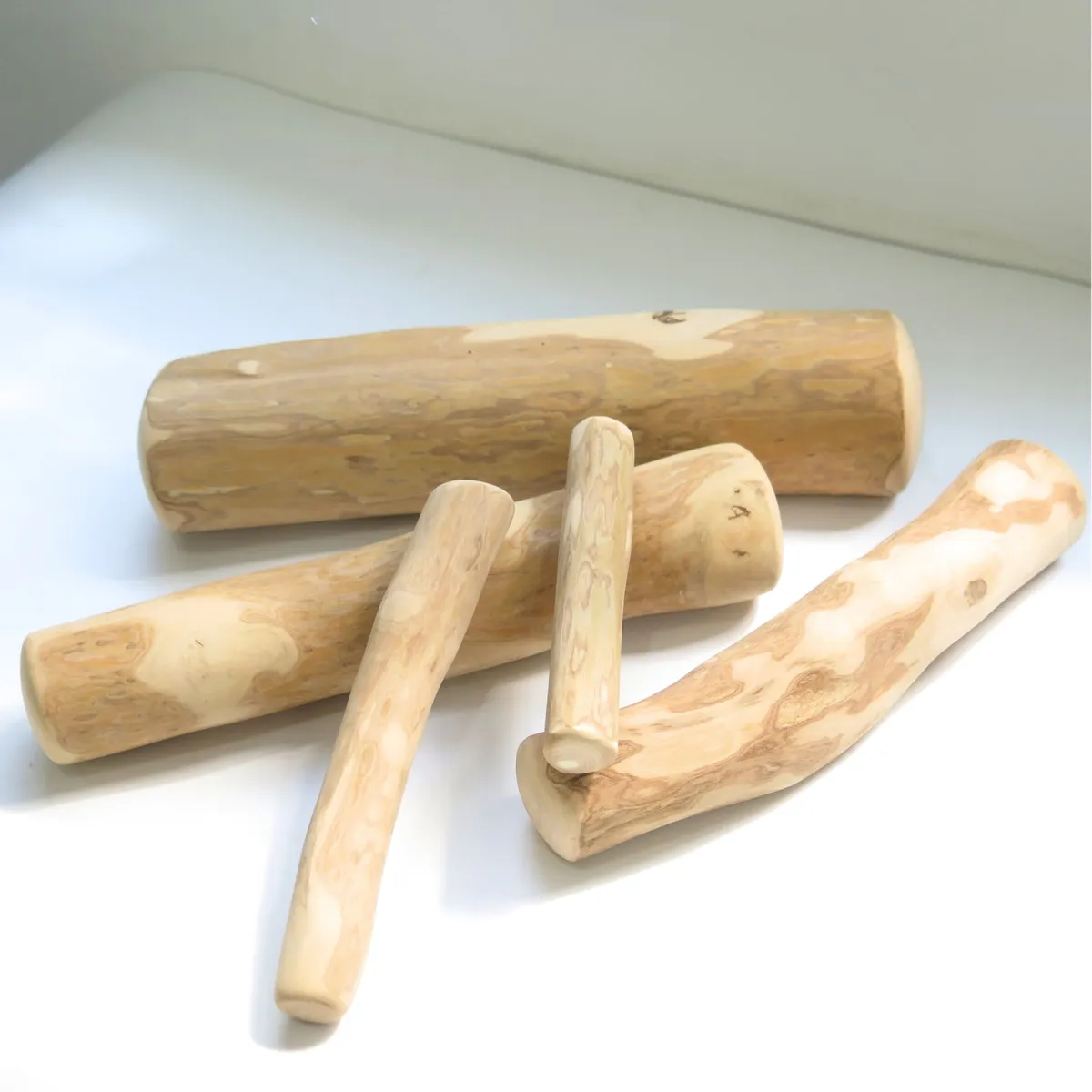
What the tag is for, and what it is not for
A listing can hold a paragraph. A tag cannot. Our standard tag is 5 × 9 cm in kraft or eco cardboard, and it sits inside the bag, sealed in with the product. That leaves room for your brand, the product name, a few short lines of use, and little else. If you need more, we print a tag in your size, or you add a folded insert.
The tag tells the owner how to use the chew. It is not the place for selling points that need proof. Every claim you print travels with the product for its whole life, long after you have edited the listing. For the listing side, see natural dog chew listings without overpromising.
These are sample lines, not legal or veterinary advice. Check your final pack wording with your adviser for your market.
The three lines every pack should carry
Put these first, in short sentences an owner can read in a few seconds. They suit every material we make.
- "Supervise your dog while it chews."
- "Replace the chew when it has worn small enough to swallow."
- "Remove any loose pieces, broken fragments or fibres."
One short extra fits well on a tag if there is room:
- "Not a food. Do not let your dog eat the toy."
Do not turn these into a size-by-weight chart; printed on a pack it reads as a promise. Show the real dimensions in centimetres instead.
One line about the material
After the three use lines, add one sentence that describes the material in the bag. These are the lines we would print for our own goods:
| Material | Sample line for the tag |
|---|---|
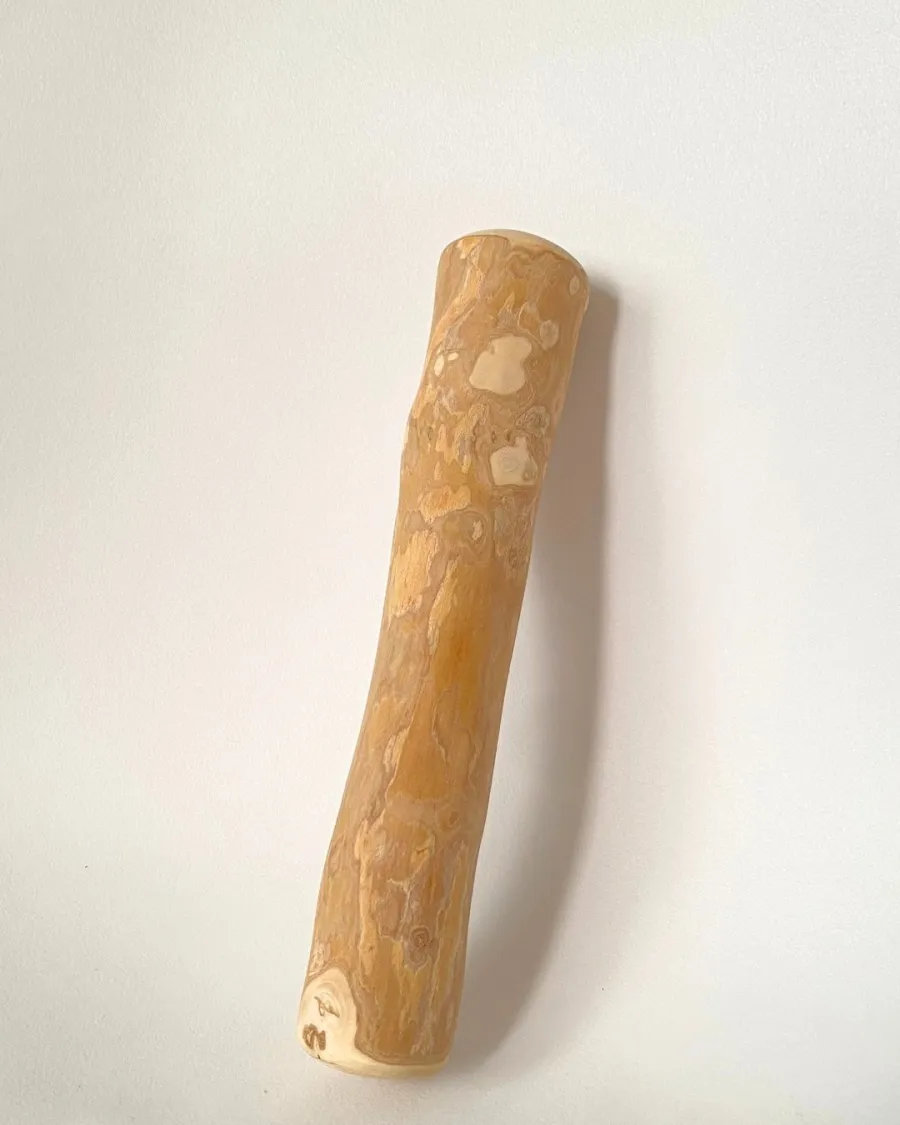
| Coffee wood | "Natural wood. Each piece has its own shape and grain. After opening, the wood slowly adjusts to the air in your home. Store away from heat." |
| Hemp | "Natural hemp fibre. Replace the toy when it starts to come apart." |
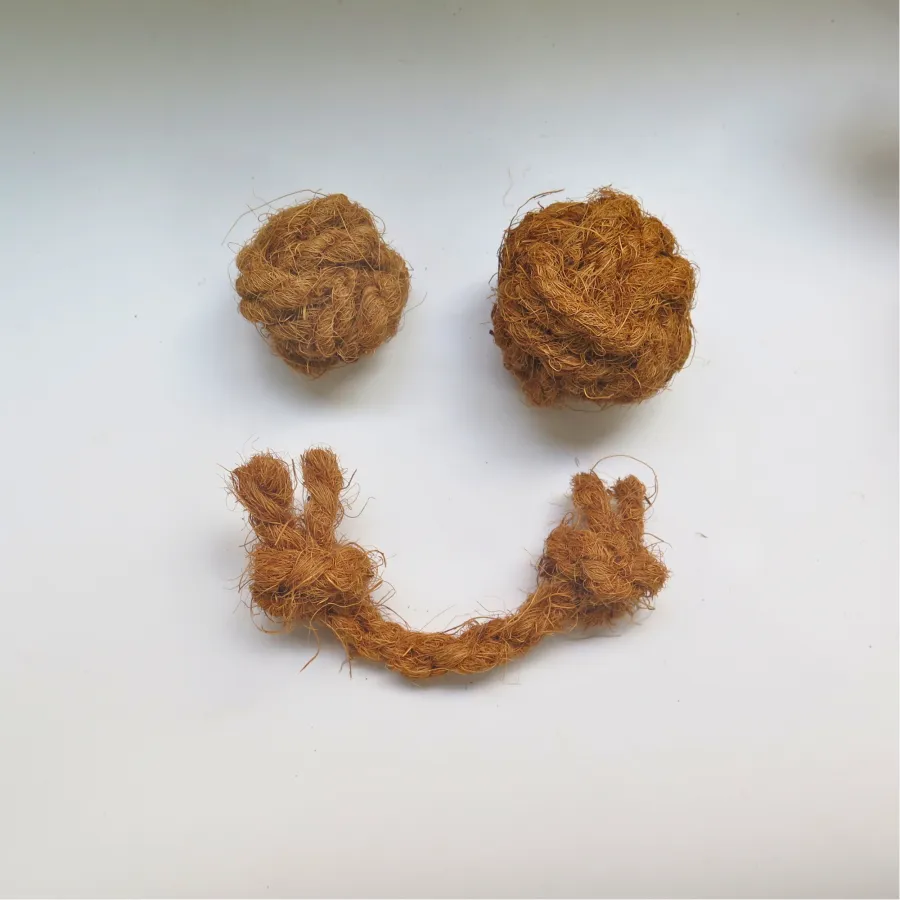
| Coco coir | "Soft natural coconut fibre for occasional play. It frays faster with strong chewers. Replace when worn." |
| Loofah | "Cut from dried loofah gourds. Replace when worn." |
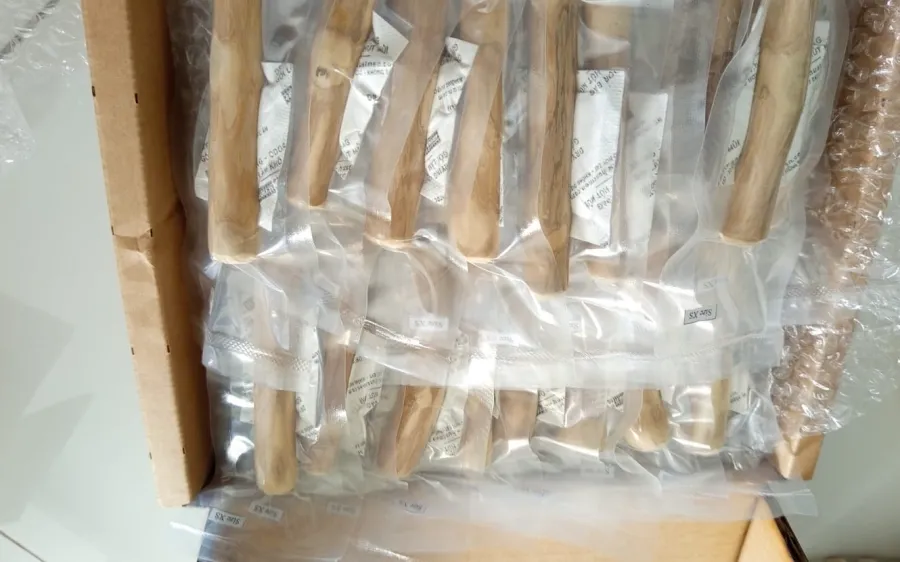
The coffee wood line matters most. The wood is vacuum-sealed to slow the exchange of moisture; once the owner opens the bag, it balances with the room. That is normal for natural wood and is not a defect.
For coco coir, the "occasional play" line is the one that protects your reviews. Coir sold as a tough chew earns one-star reviews.
Words to keep off the pack
Keep off any word you cannot back with a document you hold today. On a natural chew, these are the ones that cause trouble:
- "Safe", "non-toxic", "100% safe". Replace with the three use lines above.
- "Dental", "cleans teeth", "healthy". These are health claims; leave them out.
- "Vet-approved", "vet-recommended". Only with a named source you can show.
- "Indestructible", "chew-proof", "lasts forever". Every natural chew wears down.
- "Chemical-free", "untreated". For our goods the true line is "No chemicals are added in production."
- "Plastic-free packaging" on a vacuum or poly bag. The bag is plastic.
Why each one is a problem, with the rules behind them: what natural dog toys can and cannot claim.
Where each piece of text goes
Natural chew packs carry several pieces of text, and each has its own place. Mixing them up is how a warning ends up hidden inside a sealed bag.
| Text | Where it goes in our packing |
|---|---|
| Your brand, product name, use lines, material line | Your tag, inside the bag, sealed in with the product |
| Suffocation warning | On the outside of every bag, on the same face as the barcode |
| Barcode | Outside of the bag; you create the code, we print it |
| Size label | Outside of the bag |
| "Made in Vietnam" | As your market requires; see origin marking |
The exact suffocation wording we use, and why we put it on every bag, is in suffocation warnings on pet toy bags. Which languages your tag needs depends on where you sell; ask your importer before you send the file.
Getting the tag right before the full run
You send the tag file; we print it. If you would like us to design it, we can. Design is a paid service, quoted with your order.
- Sample pack first. We pack one sample with your tag and labels, you confirm it, and only then do we pack the order.
- Count on arrival. We count tags and barcode labels as soon as they arrive.
- Read it on the real bag. Check your lines on the sample, at the real size, before you approve.
Questions sellers ask about safety notes on packs
What safety text should a natural dog chew tag carry?
Three use lines: supervise your dog while it chews, replace the chew when it has worn small enough to swallow, and remove loose pieces or fibres. Then add one line about the material.
Can I print "safe" or "non-toxic" on the tag?
Only with a document that backs it. On a natural chew, clear use instructions do the job better and do not promise what a product made from nature cannot.
Where does the suffocation warning go?
On the outside of every bag, on the same face as the barcode. Your tag sits inside the bag, so it is not the place for the bag warning.
What size is your standard tag?
5 × 9 cm, in kraft or eco cardboard. We can print a tag in the size you want.
Can you write the tag text for me?
We can design the tag as a paid service, quoted with your order. Check the final wording on your pack with your adviser for your market.
See the tag on a real sample
Order samples, read the lines at the real size, then send your tag file with your order.
Request samples Coffee wood chews
Your first 3 samples are free, you pay the shipping.