
Switching dog chew suppliers: a checklist before you move your orders
Before you switch, collect the files you own, turn your size names into the new supplier's product codes, test with samples, then place one small order. Keep stock from your current supplier until the first new shipment has arrived and been checked. Size names and labels cause the expensive mistakes, not the wood.
- For brands, importers and Amazon sellers
- Changing supplier
- About 7 minutes to read
1. Gather the files that belong to you
Much of what makes your product yours is a file, not a factory. Ask your current supplier for anything you do not already hold, and keep it in one folder:
- Barcodes: your FNSKU labels from Seller Central, or your own UPC/EAN codes, one per size. You create them. A supplier prints and applies them.
- Logo and artwork: your logo as a vector file (AI, PDF or SVG) and the artwork for tags, labels and boxes.
- Your size chart, with length and diameter for each size, not only letters.
- Carton and shipping mark format, and the FBA box labels if you ship to Amazon.
- One approved piece of your current product, kept as the reference you will compare against.
If you do not have artwork files, a new supplier can design from your logo. With us, design is a paid service, quoted with your order.
2. Turn your size names into product codes
Size names travel badly between suppliers. Your M may be our L. A whole order packed one size off is one of the costly mistakes we know from packing, and the fix is simple: agree codes, not letters. Send your sizes as length and diameter, and ask the new supplier to confirm which code each one becomes, in writing.
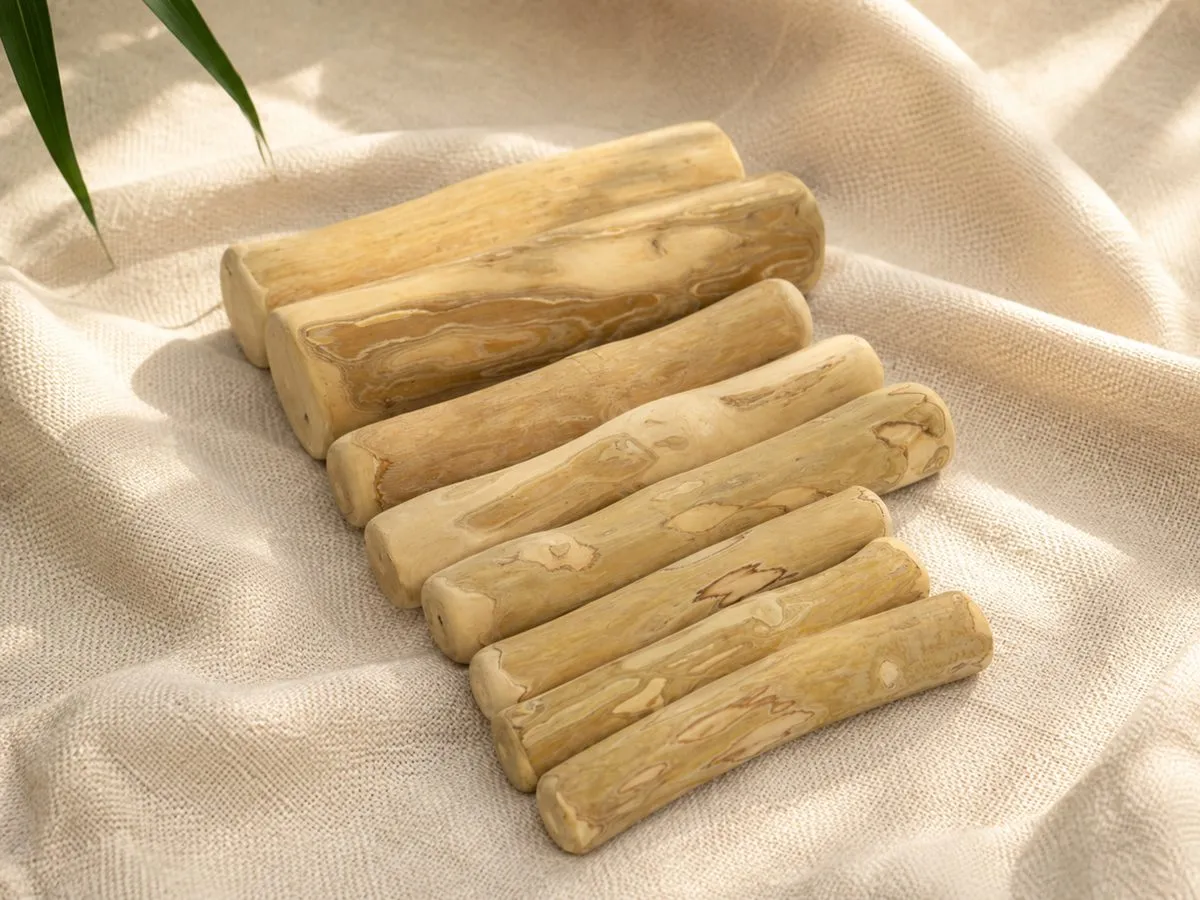
For our coffee wood chews, the codes and dimensions are:
| Code | Length | Diameter |
|---|---|---|
| CC01XS | 10–11 cm | 1.5–2 cm |
| CC01S | 13–14 cm | 2–2.5 cm |
| CC01M | 17–18 cm | 2.5–3.5 cm |
| CC01L | 18–19 cm | 3.5–4.5 cm |
| CC01XL | 20–21 cm | 4.5–5.5 cm |
| CC01XXL | 22–23 cm | 5.5–8 cm |
Coffee wood is natural, so every stick moves within its range. Tolerance is written in centimetres. Weights per size are on coffee wood chews.
3. Test the new supplier with samples
Order samples in the sizes you sell most, packed the way your bulk order would be. Put them next to your reference piece and check length, diameter, pack and finish. With us, your first 3 samples are free and you pay the shipping. A side-by-side method is in how to compare two coffee wood chew suppliers, and the point-by-point check is in what to check in natural chew samples.
If your pack carries your brand, also ask for a branded sample. It is charged, and as a reference it takes 10–15 days from the day the design is approved. It shows you your tag, label or box made by the new supplier before any volume depends on it.
4. Place one small order first
A first order does not need to replace your whole volume. Our minimum is 50 pieces per item for coffee wood, Gorilla, loofah, hemp and coco coir, and 100 per item for pet beds, with sizes split inside an item. Plain goods of 50–200 pieces take 8–10 days from the day we receive your deposit. With your own labels or boxes, we confirm the time once we have reviewed the design files.
- Fix the packing spec before production. Changing it after cartons are packed means opening them again.
- Send labels and tags early, and ask the supplier to count them on arrival. A shortage found on packing day delays the shipment.
- Approve one labelled carton first. We label a single trial carton, you approve it, and only then do we label the rest.
5. Overlap your stock
Do not run your current stock down to zero before the new goods land. Count back from the date you need the new stock on the shelf: production time, then shipping and customs on your side, then your own receiving and checks. Freight quotes carry a validity date, so confirm the shipping part close to the order. A worksheet for counting back is in Q4 lead times for natural pet toys.
If you sell on Amazon, the new product still has to match what your listing describes, down to the size. That is the job of the size mapping in step 2.
6. Check origin, codes and paperwork
If the new supplier is in a different country, the origin on your pack changes, and so may the import duty. Your customs broker confirms the import code and duty in your country. Our reference codes are on the documents page, and US origin marking is covered in "Made in Vietnam" marking. For a move away from China in particular, see sourcing pet products outside China in 2026.
Finally, have the agreed terms written on the proforma invoice: product codes, tolerance, packing, payment trigger and, for coffee wood, the crack level. The accepted crack level is written on the proforma invoice before you pay a deposit. Our proforma invoice checklist lists each line to check.
Questions buyers ask when switching supplier
Can I keep my Amazon barcodes when I change supplier?
Your barcodes are created by you, in Seller Central or as your own UPC/EAN codes. A new supplier prints and applies the codes you send.
How small can a first order with a new supplier be?
With us, 50 pieces per item for coffee wood, Gorilla, loofah, hemp and coco coir, and 100 per item for pet beds. Sizes can be split inside an item.
How do I make sure the new sizes match my old ones?
Send each size as length and diameter, and agree in writing which product code it becomes. Then check the samples against your reference piece.
Can you use my existing tag and box artwork?
Yes. Send the files and we check them with our printer. Branded packing is quoted after we review the design.
Should I stop ordering from my current supplier first?
No. Keep stock until the first shipment from the new supplier has arrived and been checked.
Start the switch with samples
Your first 3 are free, you pay the shipping.