
Coffee wood reorder looks worse than the first batch? What to check
When a repeat order of coffee wood chews looks softer, drier or more cracked than your first shipment, start with three pieces of proof: the batch number on the bags and cartons, the packing list, and unboxing photos or video next to your approved sample. Separating normal wood movement from a real production fault takes a clear reference before you claim or send stock into fulfilment.
- For importers and Amazon sellers
- Repeat coffee wood orders
- About 6 minutes to read
Why buyers worry about the second batch
Repeat buyers notice differences between shipments quickly. On Amazon UK, one repeat customer wrote that a newer stick felt softer than earlier ones and left bits across the floor. On Amazon Germany, a buyer reported that a first coffee wood stick lasted nearly two months while a second one split after 30 minutes.
On the wholesale side, sellers on Amazon Seller Central raise two linked fears: paying a deposit only to disagree with a supplier over what counts as an acceptable number of defects, and having lower-volume orders receive poorer stock. In another Seller Central thread, a seller described paying to ship stock into FBA and paying again to remove units flagged as defective, while a third Seller Central discussion shows how incoming one-star reviews can pull a listing down from 4.5 to 3.5.
Checking a reorder before it reaches shelves or FBA stops one uneven carton from turning into return fees and listing drops.
Five things to check as soon as a reorder lands
Open a sample of cartons on delivery day, before putting stock into storage or shipping it to a fulfilment warehouse:
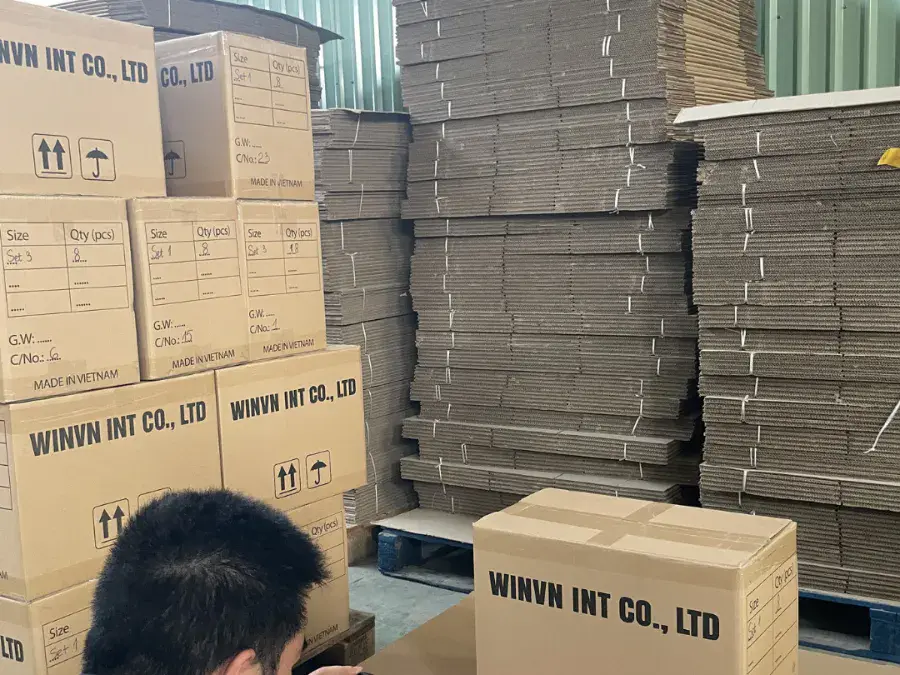
- 1. Record the batch number and check the packing list. We mark a batch number on the bags or cartons and send a packing list with each order. Check that the product codes and carton counts on the physical boxes match your packing list.
- 2. Film the unboxing. Record a video while opening the cartons. If an item is outside specification, unboxing video and clear photos are what allow us to verify what arrived.
- 3. Check the vacuum seal before opening the bag. Coffee wood chews are vacuum-sealed in bags of 1, 2 or 3 pieces with a desiccant pack inside. If a bag lost its seal in transit, separate it and photograph it before opening.
- 4. Judge cracks on freshly opened wood, not open display pieces. Once a vacuum bag is opened, natural wood slowly balances with the moisture in the room, which is normal. Compare a freshly opened stick from the new batch rather than one that sat unsealed in a warm room.
- 5. Measure by product code and compare with your approved sample. Check length and diameter in centimetres against the product code on your order (for example CC01XS to CC01XXL), then place the stick next to the sample you approved from your first run.
Why batch two can look different without being defective
Coffee wood chews are cut from mature Robusta trees, 20 years and older, cleared for farm replanting in the Central Highlands of Vietnam. We strip the bark, use the inner core, cut off both ends and reject pieces that are insect-bored, hollow, bent or deeply cracked. Even after sorting, every stick is natural wood with its own shape and grain. How to explain that to retail customers is covered in how to explain natural variation.
Three points to keep in mind when a reorder ships in a different month:
- Temperature in transit or storage: cracking can start from 40 °C and above, depending on how much moisture the wood holds.
- Size spread in centimetres: length varies by about 0.5–1 cm, and diameter tolerance widens by size (0.3–0.5 cm on XS and S, 0.5–1 cm on M and L, and 1.5–2.5 cm on XL and XXL). Wood also expands in heat and contracts in cold by up to 0.5 cm.
- Core moisture stays one limit: we measure moisture below 14% at the core before vacuum packing across every size, with no chemicals added in production and no pressure-stabilising step. The full moisture explanation is in why we measure moisture at the core and why coffee wood chews crack.
What counts as a real defect
A deep crack through the whole stick, a hollow core or a size outside your purchase order is a real fault (see what is a real fault).
How we handle a confirmed claim: send the batch number from the bags or cartons together with photos and your unboxing video. Because we keep your approved sample and issue a packing list for each order, we can trace the lot and compare the photos directly against your approved reference. When real defects exceed the accepted level, we make up the excess beyond the agreed level in your next shipment.
How to lock consistency before placing batch two
A repeat shipment is easier to check when the baseline from the first order is written down. Keep these four steps in place for every reorder:
| Step | What we do at WINVN INT | What you should keep on file |
|---|---|---|
| Approved sample | Keep your approved sample as the QC reference across production | Keep one physical sample from your approved lot |
| Proforma terms | The accepted crack level is written on the proforma invoice before you pay a deposit. Size tolerance in cm is a separate line. | Check the proforma invoice checklist before sending the deposit |
| Product codes | Pack by product code (CC01XS–CC01XXL, sets S2CC01 and S3CC01) | Send codes and centimetres on every PO, as size names vary between buyers |
| Pre-packing & lot trace | Pack a sample for your confirmation first, photograph inside cartons before sealing, mark batch numbers on bags or cartons and send a packing list | File the packing list, carton photos and batch numbers with each arrival |
For the full production sequence from raw material to container loading, see five-step QC for natural chews.
Questions buyers ask about coffee wood reorders
What should I send if a coffee wood reorder looks worse than batch one?
Send the batch number from the bags or cartons together with photos and an unboxing video. We check the lot against the approved sample we keep on file and the packing list for that order.
Why did my second batch crack more even though both orders had the same moisture spec?
Cracking can start from 40 °C and above, and any bag that loses its vacuum seal in transit can gain and lose moisture. Compare sealed bags kept away from heat with freshly opened pieces.
Do I need to accept deep cracks as natural variation?
No. Fine surface lines after opening a bag are normal, but a deep crack through the whole stick, a hollow core or a wrong size against the purchase order is a defect. Real defects beyond the agreed level on the proforma are made up in your next shipment.
How do you stop a reorder from slipping one size up or down?
We pack by product code (CC01XS to CC01XXL) rather than letter labels alone, and check against the approved sample. Size tolerances in centimetres are written on a separate line on the proforma.
Can I test samples before switching my repeat coffee wood orders to you?
Yes. Your first 3 samples are free and you pay the shipping, which can be credited against a qualifying production order. Minimum order is 50 pieces per item with sizes split freely.
Lock your reference sample before your next batch
Start by matching your current stock against real samples: your first 3 are free, you pay the shipping.